10 Best Galvanized Welded Pipe Suppliers Worldwide?
Choosing the right Galvanized Welded Pipe supplier can affect project safety, delivery schedules, and long-term maintenance costs. This guide introduces ten notable suppliers serving international markets. It focuses on evidence, not attractive claims.
Our evaluation considers manufacturing experience, product consistency, coating quality, and documented quality controls. It also reviews pipe dimensions, zinc-layer protection, welding performance, packaging methods, and export capability. Reliable suppliers should provide clear test reports, traceable batches, and practical technical support. Their facilities should demonstrate disciplined production, from steel preparation to final inspection. A warehouse with labeled bundles and protected pipe ends often reveals more than polished marketing language.
Price matters, but it should not lead the decision. A low quotation may hide weaker coatings, uncertain tolerances, or costly delays. Buyers should confirm applicable standards, project specifications, inspection requirements, and delivery terms before placing an order. Regional availability matters too. A supplier close to the destination may reduce freight risks, while an experienced exporter may handle documentation more smoothly. Both advantages deserve attention.
No supplier is perfect. Rankings can simplify a complicated market. Information can also change after publication. Production capacity, raw material costs, and lead times move quickly. For this reason, readers should request current samples, certificates, and references. A careful comparison may take longer. It usually prevents expensive surprises later. This selection offers a practical starting point, while final responsibility remains with the buyer and the project’s qualified technical team.
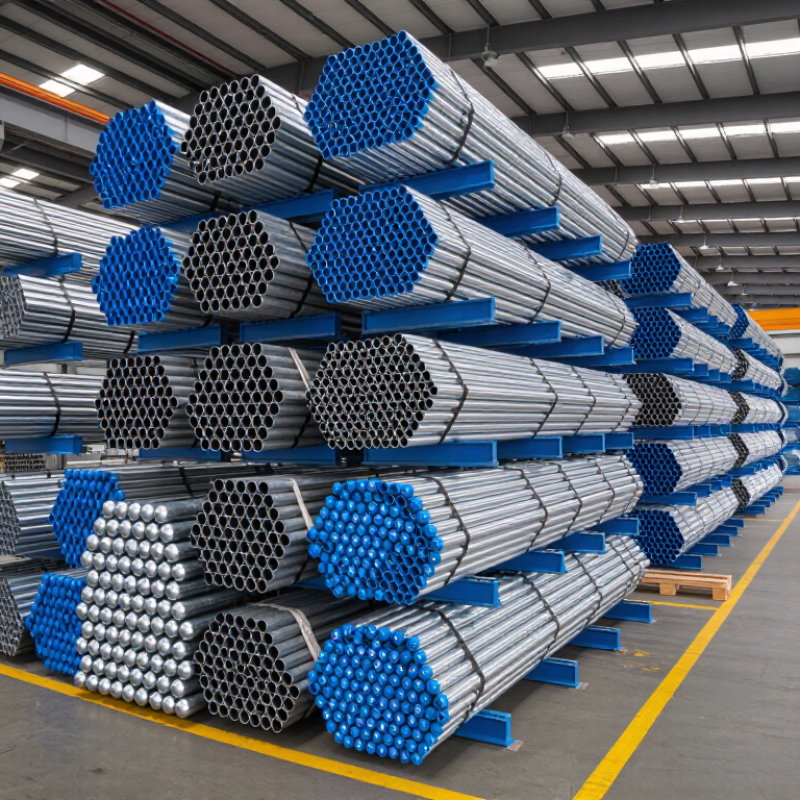
What Are Galvanized Welded Pipes and Where Are They Used?
Galvanized welded pipes are steel tubes formed from flat strip and joined along a welded seam. A zinc coating protects the steel from moisture and oxygen. The coating works as a barrier and offers sacrificial protection when scratches appear. These pipes are usually lighter and more economical than many seamless alternatives. Quality still depends on wall thickness, weld integrity, coating mass, and dimensional accuracy.
They serve practical infrastructure needs. Common uses include cold-water lines, greenhouse frames, fencing, scaffolding, fire-protection supports, HVAC systems, and outdoor structural work. However, drinking-water use requires careful checking. Local standards, internal coatings, water chemistry, and zinc-leaching limits can change the specification. A pipe that performs well outdoors may be unsuitable for a potable-water system.
Demand is linked to construction and infrastructure investment. The World Steel Association’s October 2024 Short Range Outlook projected global steel demand at about 1.77 billion tonnes in 2024 and 1.80 billion tonnes in 2025. UN DESA also projects that 68% of the world’s population will live in urban areas by 2050. That creates continuing demand for durable piping systems. Yet galvanized welded pipe is not a universal solution. Poor storage can cause wet storage stain, and damaged threads may expose bare steel. In my experience, supplier evaluation should include coating test records, hydrostatic results, traceability documents, and independent inspection. Price alone is a weak filter.
How to Evaluate Galvanized Welded Pipe Suppliers
Evaluating galvanized welded pipe suppliers starts with verifiable production evidence. The World Steel Association’s World Steel in Figures 2024 reports 1,892 million tonnes of crude steel production in 2023. This scale increases sourcing options, but it also makes supplier screening harder. Ask for heat numbers, welding records, coating test results, and complete mill certificates. Check compliance with ASTM A53, EN 10255, or the specification required by your project. Standards matter.
Inspect the actual process, not only the certificate. During a factory audit, review weld-bead consistency, pipe straightness, zinc-bath control, and storage conditions. A coating thickness gauge should confirm results across several points, including pipe ends. Require independent testing for tensile strength, hydrostatic pressure, dimensional tolerance, and coating adhesion. The OECD’s Steel Market Developments reports continuing global excess steel capacity, so unusually low prices deserve careful questions. They may reflect efficiency. They may also hide thinner walls, inconsistent galvanizing, or weak traceability.
Delivery performance deserves equal attention. Compare approved samples with shipment batches, not just catalog photographs. Review defect rates, replacement procedures, packaging quality, and recent customer references. ISO 9001 certification supports process control, but it does not prove every pipe is acceptable. I have seen polished documentation fail at the loading yard. That matters. A supplier’s openness during difficult questions is often more revealing than its sales presentation. No checklist is perfect; reassess the supplier after the first delivery.
Top 10 Galvanized Welded Pipe Suppliers Worldwide
The top 10 galvanized welded pipe suppliers worldwide should be judged by more than price. Reliable suppliers provide mill certificates, coating measurements, weld inspection records, and consistent delivery data. They usually serve construction, water systems, agriculture, and industrial fabrication markets. Experienced buyers also check pipe dimensions, zinc thickness, tensile strength, and threading accuracy. A supplier with clear technical documents feels safer than one with impressive advertising.
Tips: Request recent test reports before ordering. Confirm the applicable standard, pipe schedule, outside diameter, and zinc coating class. Ask whether samples can be inspected independently. Small details matter. Also review packaging, storage methods, and replacement policies. These points often reveal operational experience.
The strongest suppliers maintain traceable production from steel coil selection to final loading. They use protected storage to reduce white rust during transport. Some offer custom lengths, grooved ends, or threaded connections for faster installation. Regional warehouses can shorten delivery times, but local stock is not always fresh. That deserves attention. My assessment would also include customer references, response speed, and claim handling. No ranking is perfect, because project conditions differ. A supplier suitable for coastal infrastructure may not be ideal for indoor fire protection. Careful comparison remains necessary.
Top 10 Galvanized Welded Pipe Suppliers Worldwide: Standard Size Benchmark
This supplier-neutral benchmark compares ten widely used nominal pipe sizes with their standardized outside diameters. The dimensions follow ASME B36.10M standard pipe size conventions and are commonly used when evaluating galvanized welded pipe product ranges worldwide.
Key Products, Standards, and Manufacturing Capabilities
Choosing among the 10 best galvanized welded pipe suppliers worldwide requires more than comparing prices. Key products include water pipes, structural tubes, fire sprinkler pipes, and mechanical tubing. Common sizes range from small household lines to large infrastructure sections. Buyers should check wall thickness, outside diameter, zinc coating, and end preparation.
Reliable manufacturers work against recognized standards, such as ASTM A53, ASTM A795, EN 10255, and ISO 1461, when applicable. The correct standard depends on the pipe’s service and destination market. Ask for mill test certificates, chemical analysis, tensile results, and coating measurements. Third-party inspection can verify these records. It is not excessive for critical projects.
Manufacturing capability reveals practical reliability. Look for controlled steel forming, high-frequency welding, online ultrasonic testing, hot-dip galvanizing, thread cutting, and automatic bundling. Good facilities protect welded seams from excessive zinc buildup. They also maintain consistent coating adhesion after cooling. During factory visits, inspect storage areas. Wet bundles may develop white corrosion before shipment. A clean production line helps, but it does not guarantee every batch is perfect. Sample testing remains necessary. Suppliers should explain nonconforming product procedures, traceability, packing methods, and production capacity during peak seasons. Delivery promises sometimes look stronger than actual scheduling records. A careful review of previous inspection reports can expose that weakness.