Empowering Engineering Excellence: Innovate, Elevate, Deliver.

7 Best Maize Flour Mill Machines for Global Buyers?

Choosing the right Maize Flour Mill Machine can shape product quality, operating costs, and long-term business stability. Global buyers face many options, from compact village mills to automated industrial systems. Each machine suits different production goals.

This guide examines seven practical machine types for international buyers. It considers capacity, milling fineness, power use, maintenance, hygiene, and installation needs. A small processor may value simple controls and low spare-parts costs. A large plant may require continuous feeding, stainless-steel contact parts, and stable output. Moisture control also matters. Wet maize can reduce efficiency and create uneven flour.

Real purchasing experience shows that attractive specifications are not enough. Factory testing, clear manuals, and responsive technical support deserve equal attention. Buyers should request sample flour, motor details, screen sizes, and energy data before payment. They should also confirm voltage compatibility and shipping protection. Small details can become expensive problems.

No machine is perfect. Some advertised capacities depend on maize variety, moisture, and operator skill. This guide therefore treats supplier claims carefully and encourages independent verification. It also recognizes that the cheapest machine may not deliver the lowest total cost. Reliable performance, accessible parts, and safe operation often matter more than a low starting price. The following comparison offers a practical foundation for selecting equipment with greater confidence.
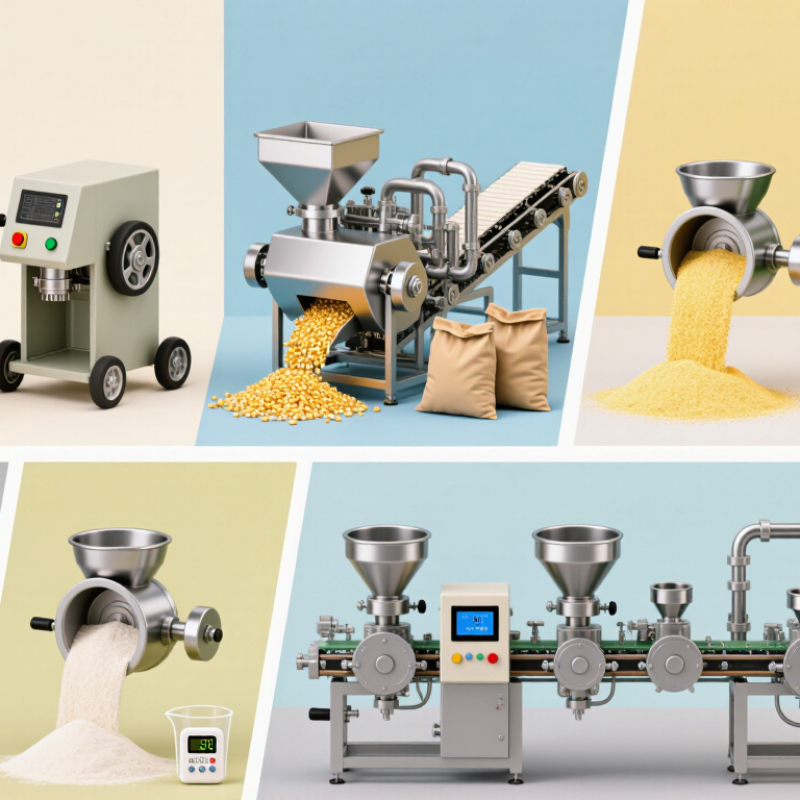
7 Best Maize Flour Mill Machines for Global Buyers?

What Makes a Maize Flour Mill Machine Suitable for Global Buyers?

A maize flour mill machine suitable for global buyers must handle different grain quality, climates, and power systems. USDA Foreign Agricultural Service data projects 2024/25 global maize production at about 1.22 billion tonnes. That scale demands dependable milling, not impressive brochures. Buyers should check hourly output, flour fineness, moisture tolerance, and recovery rate. A machine producing consistent flour from 12% to 14% moisture maize is more practical for varied supply chains. However, advertised capacity often assumes ideal grain. Real performance may be lower.

Food safety also shapes international suitability. The FAO and WHO Codex General Principles of Food Hygiene recommend hygienic design, cleanable surfaces, and contamination control. Food-contact parts should resist corrosion and avoid difficult-to-clean corners. Dust extraction matters, especially in enclosed milling rooms. A reliable machine should also support common electrical standards, adaptable motors, and clear safety guards. Spare screens, bearings, and belts should be available locally or shipped quickly. Otherwise, a small failure can stop production for weeks.

Tips: Ask for test results using your maize. Confirm actual energy use, not only motor power. Request a maintenance schedule and spare-parts list. Check whether technicians understand your language and operating conditions. Do not select only by price. A cheaper mill may consume more energy and create uneven flour. My practical concern is simple: many buyers compare output first, then discover cleaning and service problems later. That choice deserves more reflection.

Key Factors for Comparing Maize Flour Mill Machines

Comparing the seven best maize flour mill machines requires more than checking output claims. Start with capacity, maize moisture, and flour fineness. A small bakery may need 100 kilograms per hour, while a community mill requires higher continuous production. Ask for test results using maize similar to yours. Dry grain can produce different results from freshly harvested grain.

Power requirements deserve careful attention. Check voltage, phase, motor efficiency, and protection against overheating. A machine that needs frequent cooling may lose more production than expected. Food-contact parts should resist corrosion and allow simple cleaning. Stainless steel screens, sealed bearings, and accessible grinding chambers improve daily hygiene. Dust is not harmless. Effective ventilation and enclosed transfer points protect workers and reduce cleaning time.

Experienced operators also compare maintenance access, spare-part availability, warranty terms, and technical training. Listen for unusual vibration during a trial run. It may indicate poor balance or weak installation. Noise levels matter in enclosed workspaces. I would not choose a machine from capacity alone; energy use per bag can change the real operating cost. One practical mistake is ignoring local repair skills. An advanced design may become a burden if technicians cannot service it. Test before ordering. Review the sieve pattern, flour temperature, extraction rate, and particle consistency after several hours, not just ten minutes. Keep written records, because sales promises are difficult to verify later.

Seven Leading Types of Maize Flour Mill Machines

Seven Leading Types of Maize Flour Mill Machines

Global buyers can choose from seven leading maize flour mill types: hammer mills, plate mills, stone mills, roller mills, pin mills, disc mills, and degerminating roller mills. Hammer mills suit small operations because rotating hammers break dried kernels quickly. Plate mills offer simple adjustment and moderate investment. Stone mills produce a traditional texture, although cleaning can be slower. Roller mills deliver consistent particle sizes for larger plants. Pin mills create fine flour but require careful control of heat. Disc mills handle varied capacities with practical maintenance. Degerminating roller mills remove bran and germ before milling, producing lighter flour and longer shelf stability.

Scale matters greatly. FAOSTAT reported global maize production above 1.2 billion tonnes in 2022, confirming strong demand for efficient processing systems. The International Grains Council also continues tracking maize production near the 1.2-billion-tonne level. These figures support investment, but they do not identify one universal machine. Local grain moisture, electricity reliability, labor skills, and desired flour texture remain decisive.

During equipment evaluation, buyers should test maize at its actual moisture level. A machine that performs well with dry kernels may struggle with softer grain. Throughput claims can also look optimistic. Ask for measured output, energy use, sieve results, and noise data. Codex grain safety guidance reinforces the need for hygienic contact surfaces and controlled moisture. My practical preference is usually a roller system for commercial consistency, but that choice can be wrong for a remote village mill.

7 Best Maize Flour Mill Machines for Global Buyers? - Seven Leading Types of Maize Flour Mill Machines

Machine Type Typical Capacity Typical Motor Power Typical Flour Fineness Main Processing Principle Best-Suited Applications Key Advantages Important Considerations
Hammer Mill 100–1,500 kg/h 7.5–75 kW 0.5–3.0 mm, depending on screen size High-speed hammers impact maize kernels against a perforated screen. Small farms, community mills, animal-feed operations, and general-purpose maize meal production. Simple construction, flexible particle size, relatively low investment, and easy maintenance. Dust control, screen wear, and noise reduction should be included in the installation design.
Roller Mill 500–10,000 kg/h 15–160 kW for a complete milling line About 150–500 micrometres after sifting Maize passes through pairs of corrugated or smooth rolls with controlled gaps. Commercial maize flour, refined meal, grits, and high-volume food-processing plants. Consistent particle size, good control of bran and germ separation, and high throughput. Usually requires cleaning, conditioning, plansifting, aspiration, and skilled adjustment.
Stone Mill 30–500 kg/h 3–30 kW 0.3–1.5 mm, adjustable by stone gap and screening Rotating natural or composite stones crush and shear maize at comparatively low speed. Artisanal mills, whole-grain flour, traditional foods, and specialty retail products. Traditional processing, attractive product positioning, and suitability for small-scale production. Lower output than industrial systems; stone alignment, cleaning, and temperature control are important.
Plate or Disc Mill 50–800 kg/h 2.2–30 kW 0.4–2.0 mm, depending on plate design and gap Maize is ground between two roughened discs, one or both of which rotate. Household, farm, and rural milling where moderate capacity and simple operation are required. Compact footprint, straightforward operation, and relatively easy access to wear parts. Performance depends strongly on maize moisture, plate condition, and feed consistency.
Pin Mill 100–2,000 kg/h 11–90 kW Approximately 80–500 micrometres High-speed rows of pins cause impact, shearing, and particle-to-particle size reduction. Fine maize flour, instant-food ingredients, bakery formulations, and food ingredient processing. Produces fine and relatively uniform powder with adjustable output through operating conditions. Requires effective feeding, dust extraction, temperature monitoring, and wear-resistant components.
Impact Mill 200–3,000 kg/h 15–110 kW About 100–800 micrometres 高速 rotating beaters or impact elements break maize against a grinding chamber or liner. Medium-scale flour production, pre-milling, and applications needing a compact high-speed grinder. High reduction ratio, compact layout, and suitable performance across a broad range of feed sizes. Heat generation, liner wear, and final particle-size control must be managed carefully.
Degerminating Maize Milling System 1,000–20,000 kg/h of maize input 45–400 kW for the complete line About 150–600 micrometres after milling and sifting Cleaning, conditioning, degermination, milling, grading, aspiration, and packaging are integrated into one process. Industrial food plants producing refined maize flour, meal, grits, and shelf-stable products. High automation, improved bran and germ separation, product consistency, and scalable production. Higher capital cost, larger installation area, and greater requirements for utilities, operators, and commissioning.

Note: Capacity, power, and flour fineness are typical engineering ranges. Actual results vary with maize variety, moisture content, feed cleanliness, screen or roll configuration, operating speed, and the required product specification.

How to Match a Mill Machine to Production Needs

Choosing among the seven best maize flour mill machines starts with production needs, not machine appearance. A village mill may process 100 kilograms per hour, while a commercial plant may require several tonnes. These are different operating worlds. Measure daily grain intake, peak demand, available power, and working hours before contacting suppliers.

A hammer mill suits flexible, small-batch production and can handle varied maize conditions. A roller mill offers more controlled particle size for consistent retail flour. Plate mills may fit modest budgets, but their output and wear rate require careful checking. For fine flour, inspect screen design, grinding temperature, and adjustment accuracy. Ask for test results using maize similar to yours. Moist grain can reduce efficiency and cause blockages.

Do not ignore cleaning and maintenance. Dust removal, sealed bearings, accessible screens, and local spare parts affect real production. In one practical assessment, a high-capacity machine looked attractive, but the site lacked stable three-phase electricity. The purchase would have created delays. That mistake is easy to repeat. Check motor load, floor space, noise, operator training, and food-contact materials. Confirm safety guards and applicable local standards before installation. A reliable supplier should explain expected output, power consumption, maintenance intervals, and limitations in writing. Claims without test conditions deserve caution.

Installation, Maintenance, and International Purchasing Considerations

For global buyers comparing seven maize flour mill machines, installation planning matters as much as grinding capacity. Confirm the required floor area, power supply, ventilation, and raw-maize flow before ordering. A machine rated for 1,000 kilograms per hour may need stable three-phase electricity and extra room for cleaning. Measure doorways and container access. Small oversights become expensive delays. Ask the supplier for foundation drawings, wiring diagrams, and a complete spare-parts list.

During installation, use a level concrete base and keep the machine away from standing water. An electrician should verify voltage, grounding, motor protection, and emergency stops. Run a dry test before feeding grain. Then process a small batch and inspect flour fineness, temperature, and dust leakage. Do not trust the factory setting blindly. Local maize moisture can change performance. Operators need practical training on sieve changes, belt tension, lubrication, and safe cleaning.

Maintenance should follow operating hours, not guesswork. Clean sieves and aspiration channels daily, inspect bearings weekly, and record unusual vibration or noise. Replace worn screens before output quality falls. International purchasing also requires clear documents, including a packing list, installation manual, warranty terms, and export specifications. Confirm customs requirements, plug standards, and after-sales response times in writing. Cheap shipping can hide weak protection. This is where buyers sometimes miscalculate. A local technician and basic spare kit can reduce downtime, although neither replaces proper training.

7 Best Maize Flour Mill Machines for Global Buyers

Typical processing capacity and installed motor power by machine configuration. Values are indicative technical ranges for international equipment planning and should be confirmed with the supplier for the target maize variety and final flour specification.

Installation

Check foundation strength, electrical frequency, dust extraction, ventilation, grain cleaning, and safe material flow before commissioning.

Maintenance

Inspect screens, hammers, rollers, bearings, belts, and sifters regularly. Keep spare wear parts available to reduce unplanned downtime.

International Purchasing

Confirm voltage, phase, throughput basis, food-contact materials, export packing, documentation, installation support, and after-sales service.

Download
Brochure