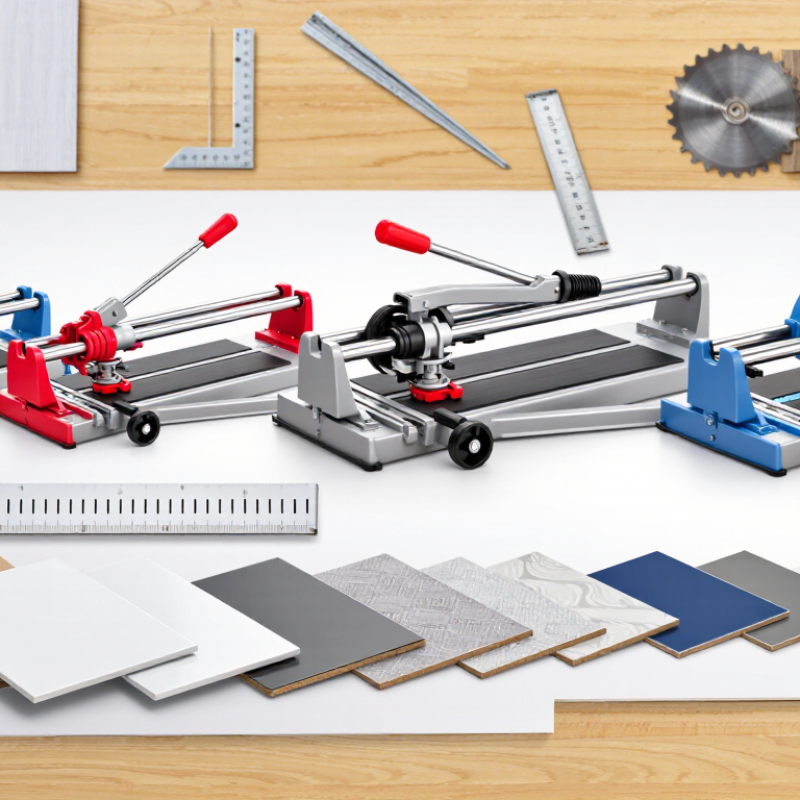
| 1 | Heavy-Duty Manual Rail Cutter | Ceramic, porcelain, and many standard wall tiles | 600–1,200 mm | Up to about 12–16 mm | Score and snap | Dry; minimal dust | Fast setup, portable, quiet, and economical for repetitive straight cuts | Less suitable for very hard porcelain, textured surfaces, narrow strips, and diagonal cuts |
| 2 | Compact Manual Tile Cutter | Ceramic wall tile, glazed tile, and small porcelain tile | 300–600 mm | Up to about 8–10 mm | Score and snap | Dry; minimal dust | Lightweight, easy to transport, and practical for bathrooms and small rooms | Limited cutting capacity and lower leverage on dense or thick tiles |
| 3 | Large-Format Manual Rail Cutter | Large porcelain panels and long ceramic tiles | 1,200–1,800 mm | Up to about 10–15 mm | Score and snap | Dry; low dust | Handles long straight cuts without electricity or water | Bulky, expensive, and dependent on consistent scoring pressure and tile support |
| 4 | Wet-Table Tile Saw | Porcelain, ceramic, glass, quarry tile, and natural stone | 450–1,200 mm | About 25–40 mm, depending on blade and design | Diamond blade | Water-cooled; greatly reduces airborne dust | Accurate straight, diagonal, and plunge cuts across many hard materials | Requires electricity, water management, cleaning, and a stable work area |
| 5 | Portable Wet Tile Saw | Ceramic, porcelain, glass, and smaller stone tiles | 300–600 mm | About 15–35 mm | Diamond blade | Water-cooled; low airborne dust | More portable than a full-size saw and capable of clean hard-tile cuts | Smaller table, shorter cutting length, and more frequent water replenishment |
| 6 | Bridge Tile Saw | Large-format porcelain, stone, and thick pavers | 600–1,500 mm | About 30–60 mm | Sliding diamond blade | Water-cooled; low airborne dust | Rigid support and powerful cutting action for thick or oversized materials | Heavy, costly, and less convenient for occasional residential work |
| 7 | Angle Grinder with Diamond Blade | Porcelain, ceramic, stone, and concrete-based tiles | No fixed limit | Typically up to 20–30 mm per pass | Rotating diamond blade | Dry or wet; dry cutting creates substantial dust | Low entry cost and flexible for curves, notches, bevels, and difficult shapes | Requires skill; noisy, dusty, and less precise for long straight cuts |
| 8 | Diamond Hole Saw Kit | Ceramic, porcelain, glass, and stone tiles | Not applicable | Commonly up to about 20–30 mm | Diamond-coated core bit | Wet use recommended; dry use depends on bit instructions | Essential for plumbing, electrical, and fixture openings from roughly 5–120 mm | Not a general-purpose cutter; drilling is slower and bits wear over time |
| 9 | Tile Nippers | Ceramic, mosaic, and thin glass tile | Not applicable | Usually up to about 6–8 mm | Mechanical nibbling | Dry; small chips may be produced | Useful for small adjustments, curved edges, mosaic shaping, and detail work | Slow for large cuts and can leave uneven edges without subsequent sanding |
| 10 | Oscillating Tool with Diamond Grout Blade | Ceramic, porcelain, and stone tile for localized work | Short cuts only | Typically up to about 10–20 mm | Vibrating diamond blade | Usually dry; dust extraction may be available | Precise access around corners, installed tiles, grout joints, and small notches | Slow, limited in depth, and unsuitable for high-volume or long straight cuts |