China Top 10 Bulk Impact Gloves Manufacturers?
Choosing reliable Bulk Impact Gloves manufacturers in China requires more than comparing catalog photos or unit prices. Buyers must examine impact protection, abrasion resistance, grip performance, stitching quality, and production consistency. A glove may look rugged on a monitor, yet feel stiff, loose, or poorly balanced after several hours of work.
This guide introduces ten Chinese manufacturers serving industrial, construction, oil and gas, logistics, and mechanical applications. The selection considers factory experience, product specialization, material choices, testing procedures, customization capacity, export records, and customer support. It also encourages buyers to verify current certifications and test reports directly. Claims can change.
Dr. Andrew Hale, a respected safety-science researcher, said, “Safety is a property of systems, not simply of people.” That principle matters here. Gloves cannot replace training, hazard assessment, or correct tool handling. They should support a complete protection strategy.
In practical terms, compare reinforced palms, thermoplastic rubber coverage, breathable backs, secure closures, and sizing accuracy. Check whether impact protection covers the knuckles and fingers, rather than only the visible back panel. Ask for sample pairs. Inspect seams under tension. Test grip with dry and lightly oily surfaces when relevant.
The ranking is a useful starting point, not a final verdict. A supplier with advanced machinery may still miss delivery expectations. A smaller factory may offer better communication and flexible development. Readers should balance evidence, application needs, budget, and long-term reliability before placing a bulk order. Some details may remain imperfect, because manufacturing performance changes over time.
What Are Bulk Impact Gloves?
China Top 10 Bulk Impact Gloves Manufacturers?
What Are Bulk Impact Gloves?
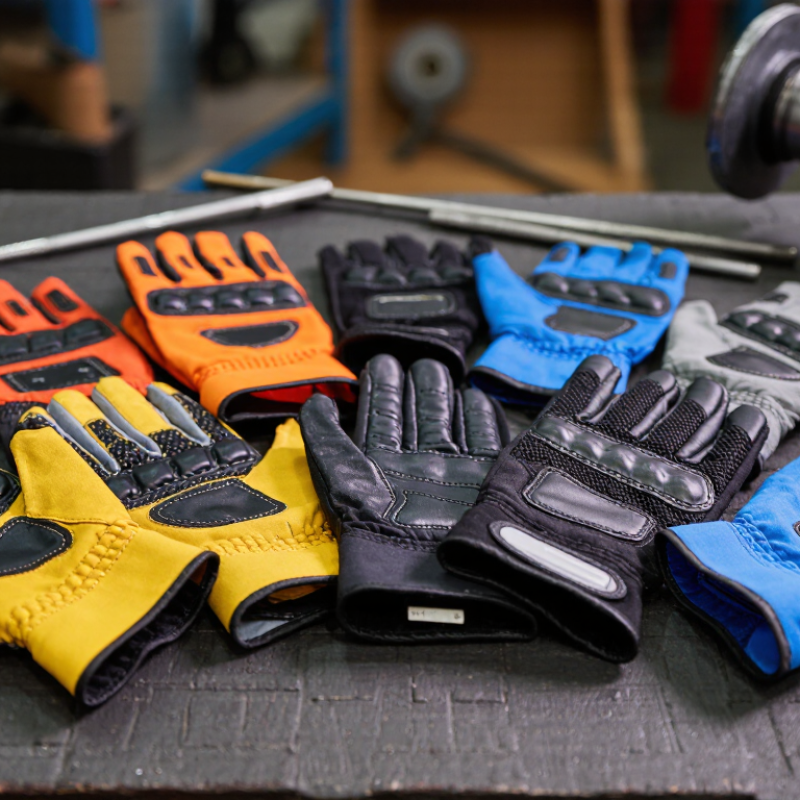
Bulk impact gloves are protective work gloves designed to reduce injury from knocks, crushing contact, and falling objects. They usually combine a cut-resistant knitted liner with thermoplastic rubber guards across the fingers, knuckles, or back of the hand. The guards absorb and spread force, while the palm maintains grip around oily tools or rough materials.
Testing matters more than appearance. ANSI/ISEA 138 rates back-of-hand impact protection from Level 1 to Level 3, with Level 3 providing the highest measured attenuation. In Europe, EN 388 uses an impact-performance marking when the glove passes its impact test. These ratings help buyers compare products, but they do not predict every workplace accident. A glove can pass laboratory testing and still fit poorly.
Grand View Research reported that the global industrial protective gloves market was valued at several billion U.S. dollars in the early 2020s and is expected to grow steadily through 2030. That growth reflects wider use in construction, logistics, oil and gas, and equipment maintenance. Bulk purchasing can reduce unit costs, yet cheaper gloves may wear faster at the thumb seam. We learned this the hard way during repeated handling trials. Buyers should check sizing, palm coating, impact zones, abrasion results, wash instructions, and replacement rates before ordering large quantities. A strong rating is useful. It is not a complete safety plan.
Key Criteria for Evaluating Chinese Glove Manufacturers
Selecting among China’s top bulk impact glove manufacturers requires more than comparing catalog photos. Start with material traceability. Ask whether the shell uses consistent yarn, coated fibers, and impact-resistant components. Request test reports for abrasion, cut, tear, puncture, and impact performance. Reports should identify the tested model, date, laboratory, and applicable standard.
Factory experience matters. A capable manufacturer should explain its knitting process, coating control, curing temperature, and inspection points. Ask for samples from different production batches. Check palm coverage, finger flexibility, stitching, cuff strength, and size consistency. Small defects often appear after repeated bending, not during a quick showroom inspection. Production capacity must also match your order volume, packaging needs, and delivery schedule.
Reliable suppliers usually maintain written quality procedures and traceable batch records. They should discuss corrective action openly when a sample fails. That conversation can reveal more than a polished sales presentation. Worker training, equipment maintenance, and material storage also affect glove performance. Do not rely on certificates alone; verify whether they match the exact product you will receive. Some factories may offer low prices but provide limited testing evidence or unclear replacement policies. I have found that a slower, documented evaluation often prevents expensive bulk mistakes. Yet no checklist is perfect. Field trials, user feedback, and periodic inspections remain necessary after approval.
China’s Top 10 Bulk Impact Glove Manufacturers
China’s Top 10 Bulk Impact Glove Manufacturers deserve careful comparison before any large order. A strong manufacturer should show real production experience, stable quality controls, and clear testing records. Look for impact protection, abrasion resistance, grip performance, and comfortable interior stitching. These details matter during long shifts, especially around metal edges, vibrating tools, or rough cartons.
A reliable supplier should explain its materials, sampling process, production capacity, and inspection stages. Factory photos are useful, but independent audits provide stronger evidence. Ask for recent test reports and compare them with the glove’s actual construction. Some suppliers advertise quickly and answer slowly. That gap deserves attention. The “top 10” should be treated as a practical shortlist, not a permanent ranking. Capacity, pricing, and quality can change between seasons. My own sourcing experience suggests that small sample differences often become major bulk-order problems.
Tips: Request samples from several manufacturers and test them for grip, flexibility, seam strength, and impact coverage. Check carton labels, size consistency, and packaging before approval. Confirm lead times in writing. Leave room for delays; factories can underestimate busy-season pressure. A second inspection is worth considering when the order is large. Safety performance should never be judged by appearance alone.
How to Choose the Right Supplier for Your Order
When comparing China’s top 10 bulk impact glove manufacturers, price should not lead the decision. The International Labour Organization reported 2.93 million work-related deaths and about 395 million non-fatal injuries worldwide in 2023. Hand protection deserves serious checking. Ask each supplier for recent test reports, factory audit records, and traceable material details. Impact protection should align with ANSI/ISEA 138 or EN 388 impact requirements. Cut resistance, abrasion resistance, grip, and dexterity also matter.
Request production samples before approving a large order. Wear the gloves for several hours. Check whether molded impact zones press against the knuckles, whether stitching separates, and whether palm coatings become slippery with oil. A supplier that answers quickly is useful, but documented evidence matters more. Review batch consistency through pre-shipment inspections and random carton sampling. Confirm minimum order quantities, lead times, packaging, labeling, and replacement procedures in writing.
Industry forecasts from Grand View Research and Fortune Business Insights show continued growth in global protective equipment demand, but forecast figures differ by methodology. That difference is worth remembering. Do not choose a supplier from rankings alone. Compare five practical measures: certified performance, production capacity, defect rate, communication, and total landed cost. A low quotation may hide expensive delays or inconsistent sizing. A responsible manufacturer should explain testing limits clearly, even when the answer is inconvenient. That honesty is often more valuable than a polished sales presentation.
Impact Protection Benchmarks for Bulk Glove Supplier Evaluation
The chart uses the ANSI/ISEA 138-2019 impact-performance thresholds. Lower transmitted force indicates stronger impact protection: Level 1 is up to 9 kN, Level 2 is up to 6.5 kN, and Level 3 is up to 4 kN. When comparing bulk suppliers, confirm the tested protection level, sample consistency, applicable certifications, minimum order quantity, and production quality controls. ANSI/ISEA 138 levels are not directly equivalent to the EN 388 impact rating.