Empowering Engineering Excellence: Innovate, Elevate, Deliver.
Cervical cancer remains a major global health challenge. The International Agency for Research on Cancer estimated approximately 660,000 new cases and 350,000 deaths worldwide in 2022. WHO also identifies timely screening, diagnostic follow-up, and treatment as essential parts of elimination strategies. These pressures are increasing interest in portable diagnostic tools, including Hand Colposcope systems.
Market reports from Grand View Research and MarketsandMarkets describe steady growth in colposcopy and point-of-care imaging technologies. However, published estimates differ because market definitions are not consistent. Some reports include smartphone adapters, while others count complete examination systems. That limitation deserves attention.
Dr. Mark Schiffman, a leading cervical cancer and colposcopy researcher, has described colposcopy as “an imperfect science.” His observation remains practical. A compact device cannot replace clinical training, biopsy judgment, or reliable follow-up. It can, however, bring magnified imaging into smaller clinics, outreach programs, and examination rooms with limited space.
This article reviews China’s top 10 Hand Colposcope manufacturers through practical criteria. These include optical performance, illumination uniformity, image resolution, ergonomic design, software usability, sterilization compatibility, and clinical documentation. Manufacturing quality also matters. Buyers should examine ISO 13485 certification, applicable IEC 60601 compliance, NMPA registration status, warranty terms, and service response.
The ranking is not absolute. A supplier may offer excellent hardware but limited clinical support. Another may provide strong customization but weaker international documentation. Real-world suitability depends on the intended setting, operator skill, patient volume, and budget. That is where careful comparison becomes more valuable than promotional claims.
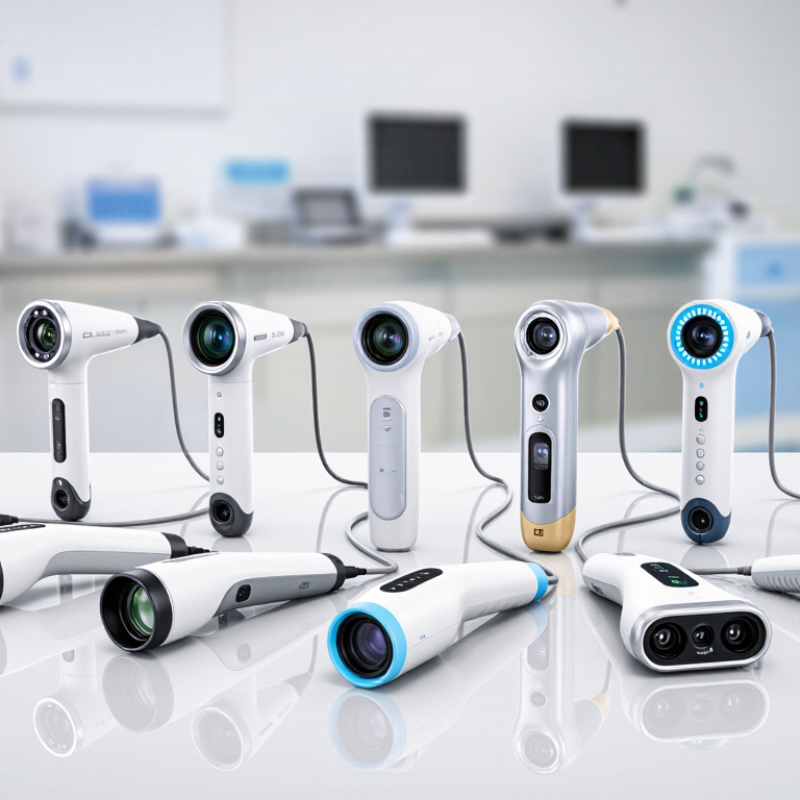
A hand colposcope is a compact examination device for viewing cervical tissue at enhanced magnification. It usually combines a small optical or digital lens with bright, focused illumination. Some models connect to a tablet or computer, allowing clinicians to capture and review images. Unlike a standard pelvic examination, it can reveal fine vascular patterns and surface changes more clearly.
During assessment, a clinician may apply diluted acetic acid to the cervix. Abnormal areas can temporarily appear white, while iodine may highlight contrasting tissue patterns. The device enlarges these changes; it does not diagnose cancer by itself. Clinical history, screening results, and, when indicated, biopsy findings remain essential. This distinction is easy to miss.
The World Health Organization reported about 660,000 new cervical cancer cases and 350,000 deaths worldwide in 2022. Better visualization can support timely referral, especially where larger examination systems are difficult to install. However, image quality depends on lighting, focus, cleaning, operator training, and patient positioning. A beautiful image can still mislead. WHO’s cervical screening guidance also emphasizes HPV testing and appropriate follow-up, rather than relying on visual inspection alone. In practice, hand colposcopy works best as part of a documented clinical pathway, with secure image handling and regular competency review. Some workflows remain imperfect, particularly when lighting is uneven or equipment calibration is neglected.
A hand colposcope is a portable optical examination device used to inspect the cervix and surrounding tissue. Common examination settings use low magnification for orientation, followed by higher magnification for closer visualization of epithelial patterns and blood vessels. Actual magnification ranges vary by device and clinical protocol.
China has become a major source of hand colposcopesthrough its dense medical manufacturing network. In professional procurement reviews, the reason is rarely one low price. Industrial clusters combine optical components, molded housings, LED modules, batteries, and medical-device assembly. This proximity can shorten development cycles. A Handheld Colposcope may move from a sample housing to a revised production unit within weeks. Practical buyers examine image clarity, working distance, illumination uniformity, grip weight, and battery performance.
Manufacturers in China often support different clinical workflows. Clinics may request adjustable brightness, wireless image transfer, compact stands, or protective covers. Engineering teams can modify these details with relatively flexible tooling. Export experience may also improve packaging, documentation, traceability, and spare-parts planning. Factories using ISO 13485-based systems may provide stronger process controls. Certification alone, however, does not prove clinical performance. Details matter.
When comparing the top ten manufacturers, buyers should request working samples and unedited images. Live inspections can reveal uneven lighting, loose hinges, poor cable protection, or weak software integration. Ask about cleaning procedures, warranty response times, battery replacement, and quality records. Low prices can hide trade-offs. Some suppliers overstate magnification or describe ordinary illumination as advanced imaging. Not every factory. I would not treat every specification as verified without independent testing and feedback from actual users. That takes patience.
A credible ranking of China’s top 10 hand colposcope manufacturers should begin with clinical usefulness, not advertising visibility. Real examination experience matters. Reviewers should assess image clarity, magnification, lighting consistency, and focus control during routine cervical examinations. A sharp image under uneven room lighting reveals more than a polished product photograph. Device weight also deserves attention. A clinician holding the unit for several minutes can quickly notice wrist strain or awkward controls.
Technical evaluation should include camera resolution, color accuracy, latency, battery endurance, and recording stability. The ranking should examine whether the device supports practical documentation without slowing clinical work. Manufacturing quality is equally important. Auditors can review incoming material checks, assembly controls, calibration records, and final inspection procedures. Traceable testing strengthens confidence. Compliance with applicable medical-device requirements must be verified through authentic documentation, not broad claims.
After-sales support can separate a dependable manufacturer from an attractive supplier. Evaluators should compare training, repair response, software updates, warranty clarity, and spare-part availability. Feedback from hospitals and independent clinicians should carry meaningful weight. However, user opinions may reflect local conditions or limited experience. Public information is sometimes incomplete. That weakness should be stated openly. A fair ranking may also consider production consistency, customization discipline, data security practices, and the manufacturer’s willingness to correct defects. Not every high-scoring product will fit every clinical setting. That is worth remembering.
| Rank Criterion | Weight | Evaluation Dimension | Verification Indicators | Why It Matters |
|---|---|---|---|---|
| 1 | 20% | Product Safety and Regulatory Compliance | Valid medical-device registration, quality-management documentation, risk-management records, and applicable conformity certificates | Hand colposcopes are medical devices used for examination and require documented safety and compliance controls. |
| 2 | 15% | Optical and Imaging Performance | Magnification range, image resolution, illumination uniformity, working distance, focus performance, and image documentation capability | Clear and stable images are essential for visual examination, documentation, and clinical review. |
| 3 | 12% | Ergonomic Handheld Design | Device weight, grip balance, one-hand operation, control accessibility, portability, and suitability for mobile examinations | A balanced handheld design can reduce operator fatigue and support examinations in different clinical environments. |
| 4 | 10% | Illumination System | LED light source, brightness adjustment, color consistency, heat management, service life, and illumination coverage | Consistent illumination helps clinicians observe tissue features without excessive heat or uneven lighting. |
| 5 | 10% | Manufacturing and Quality Control | Factory audit results, incoming-material inspection, calibration procedures, final inspection, traceability, and corrective-action systems | Consistent production controls help maintain repeatable device performance between units. |
| 6 | 8% | Clinical Usability and Application Range | Suitability for outpatient care, screening, telemedicine support, teaching, mobile clinics, and routine gynecological examination | Broader practical usability increases the value of the device for different healthcare settings. |
| 7 | 8% | Customization and OEM/ODM Capability | Custom software, housing, accessories, packaging, language options, interface integration, and private-label production capability | Customization can help distributors and healthcare organizations meet local workflow and market requirements. |
| 8 | 7% | After-Sales Service and Technical Support | Warranty terms, repair process, spare-parts availability, user training, response time, and technical documentation | Reliable support reduces downtime and helps users operate and maintain the equipment correctly. |
| 9 | 5% | Delivery Capability and Supply Stability | Production lead time, order-fulfillment history, component availability, export experience, and packaging standards | Stable supply is important for distributors, hospitals, tenders, and repeat procurement. |
| 10 | 5% | Total Cost of Ownership | Purchase price, accessory costs, maintenance requirements, consumables, warranty coverage, and expected service life | A lower total cost of ownership can improve affordability without relying only on the initial purchase price. |
| Total | 100% weighted evaluation framework for comparing eligible Chinese hand colposcope manufacturers | |||
Ranking should be based on current, independently verifiable documentation, product testing, factory assessment, and customer-support records rather than on unverified promotional claims.
China’s top 10 hand colposcope manufacturers show different strengths. Their profiles cover optical design, LED illumination, image processing, and portable clinical workflows. Several focus on lightweight devices for outpatient rooms. Others develop higher-resolution systems for hospitals and teaching centers. Some provide wireless imaging, while others favor wired stability. The differences matter.
The World Health Organization’s 2021 cervical screening guideline supports effective triage and timely diagnosis. IARC reported about 604,000 new cervical cancer cases worldwide in 2020. These figures explain the demand for practical colposcopy equipment. In reviewing ten Chinese manufacturers, key evidence includes magnification quality, working distance, battery endurance, sterilization compatibility, and service response. ISO 13485 certification can strengthen quality confidence, but certification alone does not prove clinical performance. That point is often overlooked. User training and validation data remain essential.
Tips: Ask each supplier for measured resolution, illumination values, and sample images. Request battery test conditions, not only “long runtime” claims. Check whether the hand colposcope supports still images, video recording, and secure data transfer. A clear warranty process also matters. In practice, the cheapest option may create hidden costs through weak software support or difficult maintenance. Yet expensive hardware is not automatically better. Independent clinical feedback should influence the final shortlist.
Comparing Chinese hand colposcope suppliers requires more than checking a product catalog. A reliable assessment begins with clinical use. Ask how the device performs during routine examinations, follow-up checks, and low-light procedures. Request clear images from real test units, not only polished promotional files. Check image resolution, focus control, illumination, working distance, and battery endurance. Small details matter.
A qualified supplier should provide complete technical documents and traceable quality records. Look for a mature quality system, controlled assembly procedures, calibration methods, and documented inspection results. Confirm which market approvals apply to your region, and verify certificates through official channels. Ask whether each unit has a serial number, user manual, inspection report, and software version record. Vague answers deserve caution.
Arrange a video factory tour or an independent audit when possible. Discuss sample testing before placing a larger order. Test the handle grip, screen visibility, charging process, and image storage in realistic conditions. Also compare warranty terms, replacement parts, response times, training, and language support. Get these details in writing. A low quotation may hide weak service or unstable components. I would not judge a supplier from one successful sample alone. Production consistency is harder to prove. Ask for recent customer references and batch-level quality data, while recognizing that shared evidence may still be incomplete.