China Top 10 Car AC Condenser Fan Manufacturers
A car’s air-conditioning system depends on steady airflow across the condenser, especially in slow traffic or hot weather. The fan may look simple, but motor durability, blade balance, electrical fit, and airflow all affect performance. OICA reported 93.5 million motor vehicles produced worldwide in 2023, indicating the scale of the vehicle supply chain that supports replacement and original-equipment components. The IEA’s Global EV Outlook 2024 reported nearly 14 million electric cars sold in 2023, about 18% of global car sales. That shift makes thermal management relevant across conventional and electric platforms.
This guide to China Top 10 Car AC Condenser Fan Manufacturers offers a practical starting point for buyers comparing suppliers. It considers product coverage, manufacturing capability, application data, quality documentation, and export support—not promotional claims alone. An Ac Condenser Fan Car selection should match the vehicle’s voltage, mounting points, connector, and required airflow. Check those details against a verified catalogue or sample. Small mismatches matter. Public information can also be incomplete, and factory capability does not prove consistent performance in every application. Treat any shortlist as a basis for further checks, including technical records and direct supplier discussions. Industry data establishes context, not a ranking; buyers should confirm current specifications before making a sourcing decision.
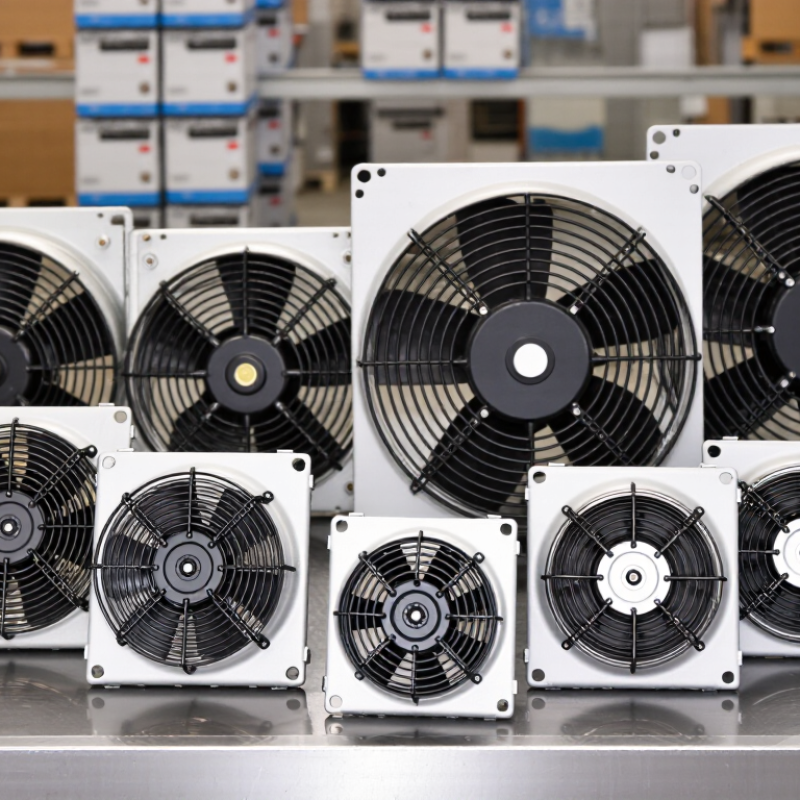
What Is a Car AC Condenser Fan?
What Is a Car AC Condenser Fan?
A car AC condenser fan moves air across the condenser, the heat-exchanger usually mounted near the radiator. As refrigerant releases heat, it changes from a high-pressure gas into a liquid. The fan helps this process, especially when the car is idling or moving slowly and natural airflow is weak. A small fan, a large job. Without enough airflow, cooling may fade at a stop, even if the system feels colder on the highway. That symptom is useful, but it does not prove the fan is faulty; electrical controls, refrigerant charge, and airflow blockage can also matter.
The U.S. Department of Energy’s fueleconomy.gov guidance reports that air conditioning can reduce fuel economy by more than 25% in very hot conditions, particularly on short trips. This figure describes the AC system’s overall fuel penalty, not the condenser fan alone. It does show why efficient heat rejection matters. In workshop checks, technicians typically inspect fan operation, wiring, and condenser fins before replacing parts. Bent fins or leaves packed against the surface can restrict airflow. The overlooked detail? A fan that spins may still move too little air.
Tips: Notice whether cooling changes between highway speed and idling. Keep the condenser face clear of debris, and avoid touching the fan while the system is powered; it may start unexpectedly.
How Car AC Condenser Fans Are Designed and Manufactured
How Car AC Condenser Fans Are Designed and Manufactured
A condenser fan must move enough air through the condenser at low vehicle speeds, when natural airflow is limited. Engineers balance blade diameter, pitch, motor speed, and shroud shape to create steady airflow without excessive noise or power draw. They use airflow simulations, then test physical prototypes for temperature, vibration, and sound. Small details matter. A narrow gap between the fan and shroud can affect both airflow and noise.
Manufacturing turns those design choices into repeatable parts. Moulded blades and housings are checked for dimensions and surface defects; motors are tested for current draw and operating speed. Assemblies then undergo airflow and durability checks, including repeated starts and exposure to heat and vibration. The trade-offs are real: a stronger fan may improve cooling but use more power. The IEA’s Global EV Outlook 2024 reports nearly 14 million electric-car sales in 2023, about 18% of global car sales. This shift adds varied thermal-management needs, though each vehicle still requires its own validated design.
Tips: Check that the shroud sits evenly and the blades turn freely before testing. Record airflow, current, and noise under the same conditions each time. A tidy prototype is not proof of long-term durability.
Criteria for Ranking Chinese Condenser Fan Manufacturers
Ranking Chinese car AC condenser fan manufacturers requires more than comparing catalog airflow figures. A useful assessment starts with verified data: airflow, static pressure, current draw, and sound measured under stated conditions. Small details matter. A fan that performs well on an open bench may lose efficiency behind a dense condenser. Reviewers should examine blade balance, motor temperature rise, connector fit, and vibration after repeated hot-cold cycles. Ask for test reports, sample dates, and acceptance limits, not just a polished specification sheet. Compare products at the same voltage, with the same shroud and installation angle. Otherwise, the numbers may mislead.
Manufacturing consistency deserves equal weight. Look for incoming-material checks, in-line balancing, end-of-line electrical tests, and lot-level traceability. A factory visit or independent audit can show whether documented procedures match the production floor. Durability evidence should cover dust, moisture, salt exposure, and endurance testing relevant to vehicle use, with methods clearly described. Service response matters too: suppliers should explain warranty handling, spare-part availability, and how they investigate field failures. Price and capacity matter, but neither should outweigh stable performance and honest disclosure. There is no perfect scorecard. Weighting remains debatable when public data is incomplete, so rankings should disclose their evidence and testing limits.
Profiles of China's Top 10 Car AC Condenser Fan Manufacturers
These profiles examine ten Chinese manufacturers of car air-conditioning condenser fans, focusing on the capabilities buyers can actually assess. The comparison considers product range, engineering support, manufacturing processes, and experience supplying automotive customers. A supplier may offer compact fan assemblies for limited engine-bay space, while another may focus on higher airflow or customized mounting points. Those differences matter during installation.
Production details deserve attention. Ask how fan balance, motor performance, and airflow are checked, and whether inspection records can be shared. A reliable profile should distinguish verified information from general company claims. Look for clear technical documentation, responsive engineering contacts, and evidence of repeatable quality checks. Small details count. Noise matters.
The profiles also help buyers prepare specific questions before requesting quotations. Confirm dimensions, connector layouts, operating voltage, and expected delivery schedules against the vehicle’s requirements. Compare support after delivery, not only unit price. One limitation remains: a written profile cannot replace sample testing or a factory assessment. It may also miss changes in capacity or product focus. Treat each overview as a starting point, then confirm current specifications directly with the manufacturer.
Products, Applications, and Market Strengths of Leading Manufacturers
China’s leading car air-conditioning condenser-fan manufacturers serve passenger cars, commercial vehicles, and hybrid and electric platforms. Common products include brushless motor fans, shrouded fan assemblies, and compact units designed for tight engine bays. Their market strengths often include high-volume production, varied voltage options, and customization for vehicle cooling layouts. These are supplier capabilities, not a ranking of individual companies.
Demand is shifting with vehicle electrification. The International Energy Agency’s Global EV Outlook 2024 reports nearly 14 million electric cars sold worldwide in 2023, about 18% of total car sales. This matters because electrified vehicles still need reliable thermal management, even without a conventional engine.
OICA reported global motor-vehicle production of about 93.5 million units in 2023, underscoring the scale of the wider supply market.
Yet production capacity alone does not prove durability. Fan noise, airflow, vibration resistance, and performance in hot, dusty conditions deserve close evaluation.
Tips:
Compare airflow and noise data at stated test conditions. Check connector, mounting, and control compatibility before sampling. Small details matter. Published specifications can differ from real vehicle performance, so validate samples in the intended application.