Empowering Engineering Excellence: Innovate, Elevate, Deliver.
Selecting Seamless Stainless Steel Pipe Suppliers is a practical decision, not just a price comparison. These suppliers serve projects where pressure, temperature, corrosion exposure, and dimensional accuracy matter. A seamless pipe has no longitudinal weld, but that alone does not make it right for every application. The specified grade, wall thickness, outside diameter, and manufacturing standard still need careful review. Details matter.
A reliable supplier should explain how its products are identified and documented. Ask whether heat numbers can be traced to material test reports, and whether certificates match the pipes being shipped. Check tolerances against your drawings, not a general product description. For a real order, confirm lengths, end preparation, inspection requirements, and delivery dates in writing. This reduces avoidable surprises when pipe arrives at the workshop.
Packaging also deserves attention. End caps, clear bundle labels, and protection from handling damage can make a difference during storage and transport. Communication is another useful test: Does the supplier answer technical questions directly, or offer vague assurances? No supplier can remove every project risk. Specifications can change, and paperwork may need closer review than expected. That is worth acknowledging. Comparing sample documents, references, and response quality can help buyers assess whether a supplier is dependable for their actual needs—not simply persuasive during a sales call.
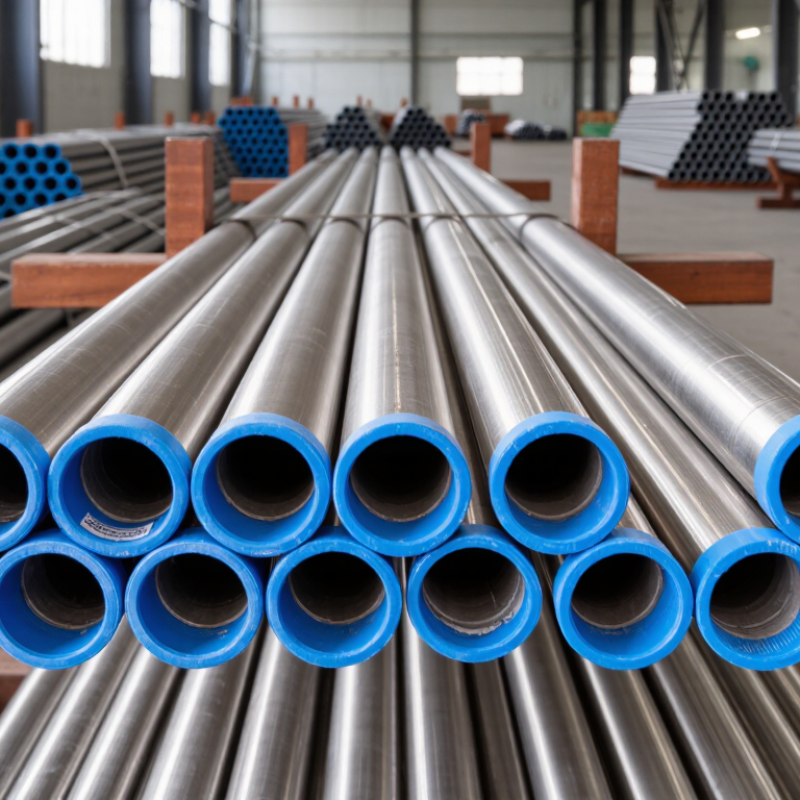
A seamless stainless steel pipe is a hollow, tubular product made without a longitudinal weld. Unlike welded pipe, it does not begin as a flat steel strip whose edges are joined. Manufacturers typically heat a solid stainless steel billet, pierce its center, then roll or draw it into the required diameter and wall thickness. The pipe is later sized, heat-treated, and inspected. It matters.
Without a weld seam, the pipe can provide consistent strength around its circumference. That can be useful in pressure systems, heat exchangers, and process lines. But seamless does not mean flawless. Surface marks, uneven wall thickness, or unsuitable alloy selection can still cause problems. Not automatically.
When comparing suppliers, ask what stainless steel grade is offered and whether its chemistry suits the fluid, temperature, and surrounding environment. Request dimensional checks and material documentation that can be matched to the delivered pipe. Look closely at the stated outside diameter, wall thickness, length, and finish. A pipe that looks smooth on the rack may not fit a tight installation. One detail is easy to miss: “seamless” describes how the pipe is made, not whether it is right for every job. Check the specification against the actual service conditions.
Seamless stainless steel pipe starts as a solid billet, which is heated and pierced to form a hollow tube. Rolling and sizing then refine its diameter and wall thickness. Since the pipe has no longitudinal weld seam, it avoids a potential variation associated with welded joints. That matters. However, seamless construction alone does not guarantee consistent performance. Alloy selection, heat treatment, and process control all influence strength, corrosion resistance, and dimensional accuracy. A poorly controlled process can still produce pipe that misses the intended requirements.
Reliable suppliers can explain how their manufacturing controls match the specified service conditions. For example, wall thickness checks help identify variation, while appropriate non-destructive testing can reveal certain surface or internal flaws. A cut section also offers a practical view of finish and wall consistency. Ask for test records and traceability tied to the applicable specification. Details count. Testing methods and acceptance criteria may differ, so buyers should confirm them rather than assume every pipe receives identical inspection. Even a well-made pipe can be the wrong choice if its grade, dimensions, or verification documents do not fit the application.
Specialized suppliers understand how seamless pipe is made, inspected, and specified. That knowledge helps buyers match material grade, outside diameter, wall thickness, and finish to real operating conditions. A pipe used in a hot process line may need different checks from one carrying clean water. Details matter.
Good suppliers can provide mill test certificates and link them to pipe markings or batch numbers. This makes material verification easier when goods arrive at a busy site. They can also explain dimensional tolerances and inspection records, rather than simply forwarding a catalog. Ask what each document covers. A certificate alone does not confirm that every delivered length is defect-free.
Reliable stock and careful handling are practical advantages, too. Protective end caps, dry storage, and clear labeling can reduce damage and mix-ups during transport. Specialized teams may also flag an unclear specification before cutting or ordering begins. That can prevent costly rework. Still, no supplier removes every project risk; buyers should check documents, inspect received pipe, and confirm requirements with their engineers. It is easy to overlook a small mismatch until installation starts.
Why Choose Seamless Stainless Steel Pipe Suppliers?
How Suppliers Ensure Quality and Compliance
Quality assurance begins before a pipe reaches the cutting table. A capable supplier checks the purchase specification, steel grade, dimensions, and intended service conditions. This matters because “stainless” alone does not define corrosion resistance or pressure performance. Details matter. Ask for heat-specific material test certificates and traceability linking each pipe to its production batch.
The World Stainless Association’s Stainless Steel in Figures 2024 reports that global stainless-steel melt-shop production reached 58.4 million tonnes in 2023. At that scale, consistent records help buyers distinguish verified material from a plausible-looking substitute. Suppliers should document chemical and mechanical test results, dimensional checks, and required pressure or nondestructive examinations. For seamless pipe, ASTM A312/A312M and related specifications may apply, but the project’s governing code and purchase order decide the requirements.
Compliance also depends on how evidence is reviewed. Check that certificate grades, heat numbers, and pipe markings match, then confirm inspection scope before shipment. Independent inspection can help on critical orders. Still, paperwork can fail. A certificate may be complete while a marking is unreadable or a test scope does not match the order. Ask who performed each check, which acceptance criteria were used, and how discrepancies are resolved.
How suppliers ensure quality and compliance through material verification and mechanical testing.
ASTM A312/A312M specifies minimum mechanical requirements for seamless austenitic stainless steel pipe. The chart compares the minimum tensile and yield strength requirements for TP304 and TP316L grades. Suppliers support compliance by verifying mill certificates, heat numbers, chemical composition, dimensions, hydrostatic or nondestructive testing, and mechanical test results against the applicable specification.
When evaluating seamless stainless steel pipe suppliers, inspect their production controls carefully. A polished catalog proves little. Ask which stainless steel grades they produce and how they verify chemical composition. Reliable suppliers should provide heat numbers, inspection reports, and material certificates for each batch.
Traceability should reach from raw material to final shipment. Without it, resolving defects becomes difficult. Check whether the supplier performs ultrasonic or eddy-current testing. Review dimensional tolerances, wall thickness, surface finish, and pressure requirements. These details affect installation and long-term service. Request sample documents before placing a large order.
Quality is only one part of supplier evaluation. Confirm manufacturing capacity, realistic lead times, packaging methods, and export experience. Clear communication matters when specifications change. Ask how they handle nonconforming pipes, replacement requests, and technical questions. Do not accept vague promises.
An honest supplier will explain limitations instead of hiding them. Still, certificates alone cannot guarantee consistent performance. An independent inspection may be worthwhile for critical applications. Some buyers focus too heavily on price and regret it after receiving pipes with uneven walls or poor protection. Compare total risk, not only the quotation. Your evaluation should balance documented quality, technical capability, responsiveness, and evidence from previous deliveries.