What is a Hydraulic Press Machine and How Does It Work?
In the manufacturing industry, the Hydraulic Press Machine plays a critical role in various processes. According to a recent industry report, the global hydraulic presses market is projected to reach over $10 billion by 2025, driven by increased automation and demand for precision engineering. These machines utilize hydraulic force to shape, cut, and assemble materials, making them essential in sectors like automotive and aerospace.
The mechanism behind a Hydraulic Press Machine is fascinating. By harnessing Pascal’s law, the press can exert large forces through minimal input. This method ensures efficiency and effectiveness, reducing energy consumption significantly. Vocational training programs increasingly highlight this technology, emphasizing its importance in modern manufacturing.
However, as the industry evolves, challenges arise. Older machines may lack the safety features found in newer models, leading to potential hazards if not maintained properly. It's essential for operators to receive updated training and for companies to prioritize equipment upgrades. Implementing these measures ensures the reliability and safety of hydraulic press operations, safeguarding both employees and production output.
What is a Hydraulic Press Machine?
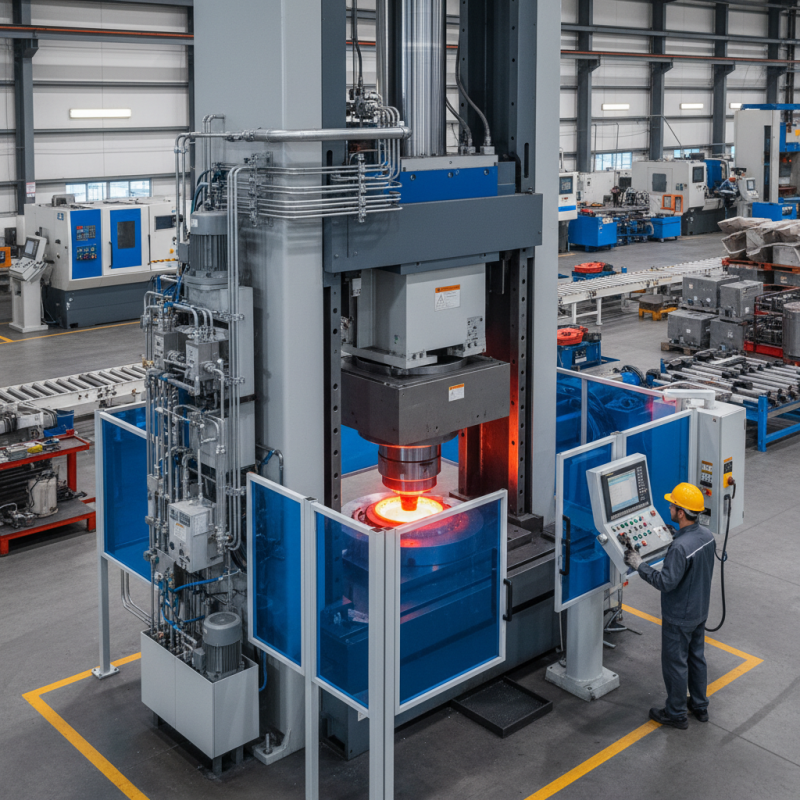
A hydraulic press machine is a crucial piece of equipment in various manufacturing sectors. It utilizes hydraulic force to compress and mold materials, making it invaluable in shaping metal, plastics, and other materials. According to a report by Grand View Research, the global hydraulic press market is projected to reach $6.34 billion by 2025, driven by its efficiency and versatility.
The working principle of a hydraulic press is based on Pascal's law. This law states that pressure applied to a confined fluid is transmitted undiminished in all directions. In a hydraulic press, a small force applied on a piston is transformed into a much larger force at another piston. For instance, a small operator force can exert several tons of pressure to mold steel sheets efficiently. However, despite its strengths, the hydraulic press can be prone to issues like fluid leakage, which can reduce performance and safety.
In many industries, the hydraulic press plays a vital role, from automotive manufacturing to metal forming. The need for skilled operators to manage the machine is essential. With growing automation, some operators may face challenges adapting to new technologies. This shift highlights a knowledge gap that must be addressed to maximize the machine’s potential and efficiency in an evolving market.
What is a Hydraulic Press Machine and How Does It Work?
| Feature |
Description |
| Definition |
A hydraulic press machine is a type of machine that uses a hydraulic cylinder to generate a compressive force. It utilizes the hydraulic equivalent of a mechanical lever. |
| How It Works |
It operates on Pascal's principle, where pressure applied to a confined fluid is transmitted undiminished throughout the fluid. This allows smaller forces to be multiplied to create larger forces at the output. |
| Applications |
Commonly used in metal forming, molding, forging, and shrink fitting operations. |
| Advantages |
High force generation, ability to work with heavy materials, versatility in applications. |
| Safety Features |
Pressure relief valves, safety guards, and automatic shutoff systems to prevent overloading. |
| Limitations |
Can be expensive to maintain, requires a hydraulic fluid supply, and may have limited speed. |
| Maintenance |
Regular checks for hydraulic fluid levels, leaks, and the condition of seals and hoses are essential. |
Key Components of a Hydraulic Press
A hydraulic press machine is an essential tool in various manufacturing processes. Understanding its key components helps to appreciate its function. The primary parts include the hydraulic cylinder, pump, and piston. The hydraulic cylinder houses the fluid, converting pressure into force. The pump moves this fluid, creating the necessary pressure. Finally, the piston applies this force, allowing for significant compression.
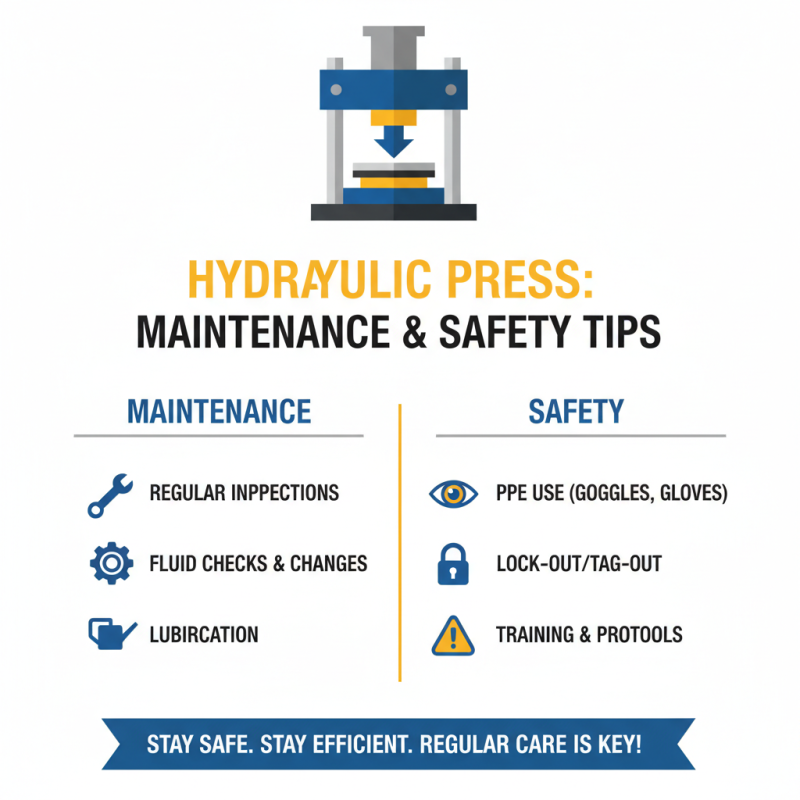
One important tip is to regularly maintain each component. A small leak in the hydraulic cylinder can lead to inefficiency. Make sure to check the seals and connections often. Ensuring the pump is in good condition is also crucial. A faulty pump can result in inadequate pressure, affecting overall performance.
Another aspect to consider is the hydraulic fluid itself. Using the correct type and viscosity is vital for smooth operation. Poor quality fluid can introduce contaminants and may lead to wear and tear. It's a common oversight that can have lasting effects. Always read the manufacturer’s recommendations for the best results.
Principle of Operation of Hydraulic Press Machines
Hydraulic press machines are essential in various industries, employing the principles of hydraulics to generate significant force through fluid mechanics. The fundamental operation relies on Pascal's principle. When force is applied to a confined fluid, it results in equal pressure throughout the fluid, enabling a small input force to create a larger output force. This efficiency is vital in metal forming, material compaction, and even recycling processes.
Data from industry reports indicate that hydraulic presses can exert forces ranging from a few tons to several hundred tons. This wide range makes them versatile for applications such as stamping, forging, and molding. For instance, in automotive manufacturing, hydraulic presses shape components with precision, meeting stringent quality standards. However, maintenance is often overlooked, leading to reduced effectiveness over time. Regular inspections and responsive adjustments are crucial to ensure longevity.
Moreover, while hydraulic presses are generally reliable, they are not without potential challenges. Issues such as fluid leaks can compromise the system’s integrity, affecting performance. Operators should be trained not only in operation but also in identifying wear and tear. Continuous learning in this field is necessary, as advancements evolve rapidly, necessitating adaptation to newer technologies.
Applications of Hydraulic Press Machines in Various Industries
Hydraulic press machines find essential applications across numerous industries. In manufacturing, they are critical for shaping metals, plastics, and other materials. The automotive sector, for instance, heavily utilizes these machines for stamping and forming components. According to a report from the International Journal of Mechanical Engineering, about 70% of car parts undergo a pressing operation at some point in production.
In the recycling industry, hydraulic presses play a vital role in compacting waste materials. This process improves transportation efficiency and reduces landfill space. A study published by the Waste Management Research journal indicated that hydraulic presses can decrease the volume of compressed materials by up to 95%. This statistic reflects the machine's value in promoting sustainability, although energy consumption in large operations remains a concern.
Furthermore, the food industry has adopted hydraulic presses for extracting oils and juices. The extraction process retains nutrients while enhancing flavor, which consumers increasingly prioritize. However, inconsistencies in extraction yield—dependent on machine calibration—can pose challenges for producers. Despite the advantages, manufacturers must continually assess equipment performance, leading to more consistent outcomes.