Empowering Engineering Excellence: Innovate, Elevate, Deliver.
Buying a Pvc Cooler Bag for international distribution looks simple until small details affect cost, safety, and customer satisfaction. A bag may appear strong in product photos, yet fail after repeated folding, heavy loading, or exposure to summer heat. Global buyers need practical evidence, not attractive claims.
This guide presents ten buying tips based on common sourcing and quality-control concerns. It examines PVC thickness, insulation performance, zipper quality, handle strength, stitching, odor, cleaning, packing, and sample testing. Ask suppliers for material specifications, production photos, inspection records, and clear sample measurements. A cooler bag with reinforced seams and balanced handles usually performs better during transport. However, thicker material does not always mean better performance. It can increase weight, cost, and shipping volume.
Test the Pvc Cooler Bag yourself when possible. Fill it with chilled bottles, carry it for thirty minutes, and inspect the bottom afterward. Check whether the zipper opens smoothly with one hand. Place the bag in a warm room and monitor temperature changes. These simple checks reveal weaknesses that catalog descriptions often hide. Requirements may also differ between destination markets, especially for labeling, packaging, and materials that contact food. Confirm current requirements with qualified local professionals. Supplier promises are useful, but independent verification is safer. Even experienced buyers can miss a weak seam or confusing carton mark. A careful purchasing process reduces unpleasant surprises and supports reliable long-term sourcing.
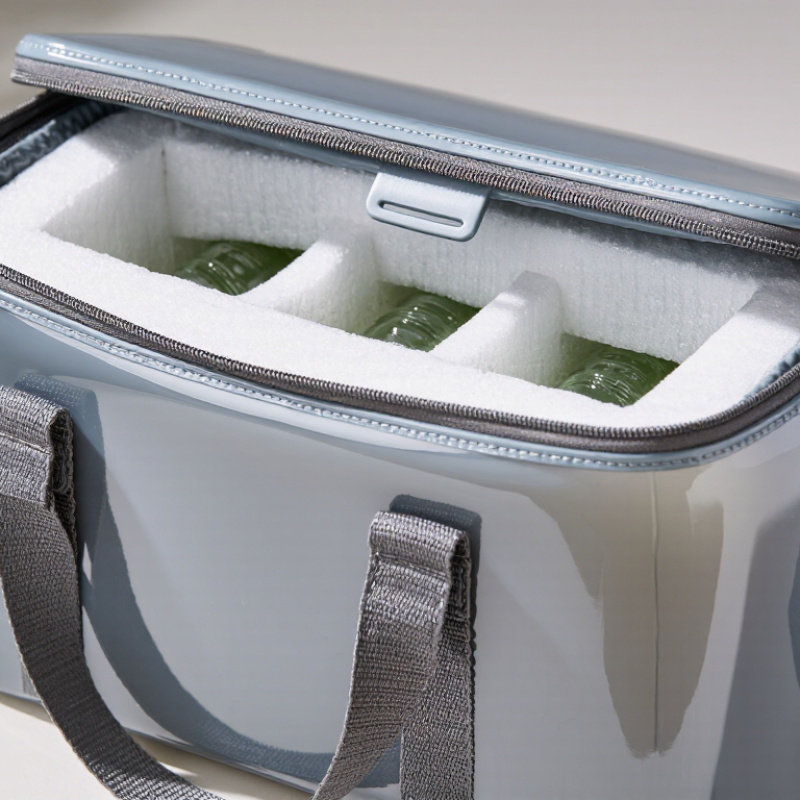
PVC cooler bags are soft-sided insulated carriers with an outer layer made from polyvinyl chloride. Their flexible walls make them easy to fold or store between trips, while a wipe-clean surface helps with everyday spills. Inside, insulation slows heat transfer, but it does not keep food cold on its own. Pre-chilled contents and suitable cold packs matter.
These bags are used for grocery runs, picnics, beach outings, meal delivery, and outdoor events. A shopper might carry chilled drinks home, while a caterer may use several bags to separate orders. The clear or coated exterior can resist light splashes, though seams and zippers are often less dependable in heavy rain. Not a hard cooler.
For buyers, capacity is only part of the decision. Check the lining, handle stitching, zipper smoothness, and insulation thickness; ask suppliers how performance was tested. A bag that looks sturdy in a sample may feel different when loaded with bottles. That gap is easy to miss. PVC surfaces can also vary in flexibility and odor, so inspecting production samples is sensible. These details do not guarantee long cooling times, but they help match the bag to its real use.
| # | Buying Tip | What to Check | Why It Matters / Typical Use |
|---|---|---|---|
| 1 | Define the intended use | Specify whether the bag is for picnics, grocery trips, lunch, travel, events, or promotional distribution. | Use affects the required capacity, shape, carrying comfort, insulation, and level of durability. |
| 2 | Choose an appropriate capacity | Compare internal dimensions and usable volume; check whether the bag needs to hold cans, bottles, meal containers, or ice packs. | A compact lunch bag suits individual portions, while larger formats are more practical for family outings or grocery transport. |
| 3 | Understand the material construction | Ask for the material specification, including the PVC outer layer, backing fabric, thickness, and any additional coatings or laminations. | PVC-coated or laminated fabrics can provide a wipe-clean exterior, but construction and performance vary by specification. |
| 4 | Check insulation layers | Confirm the lining and insulation materials, their thickness, and how the layers are joined. | Insulation can slow heat transfer, but a cooler bag does not actively refrigerate its contents. Cooling performance depends on the design, contents, ambient conditions, and use of cold packs. |
| 5 | Review seams and closure details | Inspect stitching or welded seams, zipper quality, zipper path, and reinforcement at stress points. | These details affect everyday durability and help buyers understand whether the bag is designed to resist splashes or simply to be easy to clean. |
| 6 | Assess portability and load support | Check handle length, strap adjustability, attachment points, padding, and any stated load guidance. | A shoulder strap may be useful for travel or outdoor activities; handles can be convenient for short grocery trips. |
| 7 | Confirm cleaning and care instructions | Ask how to clean the exterior and lining, whether the bag should be air-dried, and whether machine washing is permitted. | Care instructions help prevent damage to coatings, insulation, or seams. Many PVC surfaces can be wiped, but the full bag may have different care requirements. |
| 8 | Verify food-contact requirements | If food may touch the lining, identify the destination market and request applicable test reports or compliance documentation for the specific material and intended use. | A cooler bag is not automatically suitable for direct food contact simply because it is used to carry food. |
| 9 | Check destination-market requirements | Confirm the relevant rules for product safety, chemical restrictions, labeling, packaging, and import documentation in each sales market. | Requirements depend on the product, materials, intended use, and destination. Request evidence that matches the exact product specification. |
| 10 | Approve a sample and final specification | Compare a production-representative sample against agreed dimensions, materials, color, printing, stitching, and packaging requirements. | Written specifications and sample approval help reduce misunderstandings in international sourcing and repeat orders. |
Note: Performance, material composition, and regulatory requirements vary by product and market. Confirm specifications and supporting documents for the exact bag being purchased.