Empowering Engineering Excellence: Innovate, Elevate, Deliver.
Choosing among China’s top Small Hydraulic Cylinder manufacturers requires more than comparing prices and catalog dimensions. Buyers must examine material quality, sealing systems, machining accuracy, testing records, and after-sales support. A polished product page proves very little.
Peter Nachtwey, an experienced electro-hydraulic controls specialist, has stated, “A cylinder only performs as well as the system around it.” That practical view matters. Even a compact cylinder can fail when contaminated oil, poor alignment, or unstable pressure enters the application. Think of a construction attachment working in rain, dust, and vibration. Its cylinder needs more than attractive chrome plating.
China has a broad manufacturing base, including custom cylinder workshops and highly automated hydraulic producers. The strongest suppliers usually provide dimensional drawings, pressure-test reports, material details, and traceable production records. They also ask useful questions about stroke length, working pressure, mounting style, load direction, operating temperature, and duty cycle.
However, “top manufacturer” is not a universal label. A factory serving agricultural machinery may not suit mobile equipment or industrial automation. Some suppliers communicate quickly but offer weak engineering support. Others produce excellent cylinders but require larger minimum orders. This is where buyers should slow down.
A reliable comparison should combine factory experience, technical capability, independent customer feedback, and realistic delivery performance. Request samples. Inspect welds and rod surfaces. Confirm the warranty in writing. Small details often reveal large risks.
The best choice is not always the cheapest. It is the supplier that understands your actual working conditions and can prove consistent performance.
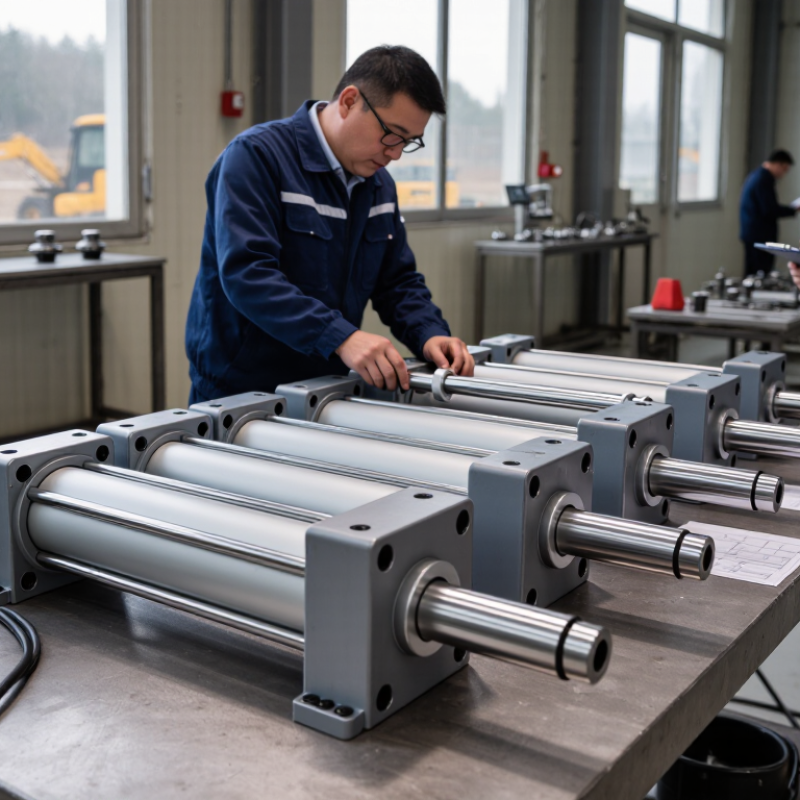
A small hydraulic cylinder converts pressurized fluid into controlled linear force. Its compact body fits inside clamping tools, agricultural attachments, lifting tables, and automated production equipment. The boundary is not perfectly fixed. Engineers usually judge “small” by bore diameter, stroke length, mounting space, and required force.
According to Mordor Intelligence’s 2024 Hydraulic Cylinder Market report, the global market was estimated at about USD 15.1 billion in 2024. It is projected to reach nearly USD 20.9 billion by 2029, with a compound annual growth rate above 6%. This growth reflects wider demand for compact motion systems. However, market-wide figures do not isolate small cylinders. That limitation deserves attention.
In practical use, a 25-millimeter bore cylinder can deliver several kilonewtons with moderate pressure. The exact output depends on pressure, piston area, friction, and return-load conditions. Small cylinders also shorten machine layouts and reduce moving mass.
Their weakness is sensitivity to contamination and side loading. A scratched rod can damage seals quickly. ISO 6020/2 and ISO 6022 provide useful dimensional and performance references, but compliance alone cannot replace application testing. Experienced engineers check oil cleanliness, mounting alignment, cycle frequency, temperature, and emergency stopping behavior before approving a design.
Small does not mean simple.
China Top Small Hydraulic Cylinder Manufacturers?
Evaluating Chinese manufacturers starts with engineering evidence, not attractive product photos. Request drawings, material grades, tolerances, and sealing specifications for each cylinder. A capable factory should explain bore accuracy, rod hardness, surface treatment, and expected operating pressure. Ask for inspection records from recent production batches. Clear answers usually reveal practical experience.
Request a sample built to your actual load, stroke, temperature, and mounting conditions. Test it repeatedly, not only on a clean workshop bench. Check leakage, rod movement, pin alignment, and pressure retention after cycling. Manufacturing equipment matters, but process control matters more. Review calibration certificates, traceability methods, and final inspection procedures. Short videos can help, yet they never replace measured data.
Communication is another serious criterion. Engineers should respond with drawings and test figures, rather than vague promises. Confirm production capacity, realistic lead times, packaging methods, and replacement support before ordering. A factory may offer a low price while quietly using inconsistent seals. I have found that small details often create the largest costs later. No supplier is flawless. Your own specifications may also be incomplete. Recheck them after receiving the prototype, especially where side loads, corrosion, or unusual duty cycles exist. A dependable partnership grows through documented changes and honest technical discussion.
China has become a major sourcing market for small hydraulic cylinder manufacturers. Many factories produce compact cylinders for agricultural equipment, lifting platforms, material handling systems, and specialized machinery. The strongest suppliers usually combine machining, welding, sealing, assembly, and pressure testing under controlled procedures.
A reliable manufacturer should discuss bore diameter, stroke length, mounting style, working pressure, and rod material before offering a quotation. Clear drawings matter. So does traceability. Experienced factories can provide inspection records, dimensional reports, and test results for each production batch. During supplier visits, buyers should examine honing equipment, surface finishing, cleanliness, and assembly discipline. Small details matter here.
A polished website proves little. It may still hide weak process control. Ask how the factory handles leakage, rod scoring, and inconsistent tolerances. Request samples that match the intended application, not generic showroom pieces. Some manufacturers respond quickly but overlook changing operating temperatures or side-load risks. That deserves careful review. Communication can also become difficult when technical terms are translated loosely. A written specification, approved sample, and defined acceptance criteria reduce that risk. The best Chinese small hydraulic cylinder manufacturers are not simply low-cost suppliers; they are engineering partners that explain limitations, document their work, and adjust designs when field experience exposes a weakness. Mistakes happen. Responsible factories learn from them.
| Evaluation Dimension | Typical Industry Data | Common Options from Chinese Manufacturers | Buyer Verification Points |
|---|---|---|---|
| Product Type | Small hydraulic cylinders are generally supplied as single-acting or double-acting units. | Tie-rod, welded, compact, flange-mounted, foot-mounted, and clevis-mounted designs. | Confirm mounting geometry, port position, retracted length, extended length, and available installation space. |
| Typical Bore Range | Approximately 25–100 mm for many small-cylinder applications. | Metric bore sizes, inch-based bore sizes, and custom dimensions can commonly be produced. | Request dimensional drawings and confirm bore, rod diameter, tolerances, and allowable side load. |
| Typical Stroke Range | Approximately 50–500 mm is common for compact machinery and automation equipment. | Standard and made-to-order strokes, including short-stroke and sensor-ready versions. | Verify stroke tolerance, cushioning requirements, cycle speed, and retracted length. |
| Rated Working Pressure | Many small hydraulic cylinders operate within approximately 7–21 MPa, depending on design. | Standard-pressure and higher-pressure configurations with application-specific seals and wall thicknesses. | Check rated pressure, proof-test pressure, burst margin, oil temperature, and duty cycle. |
| Cylinder Barrel Material | Honed steel tubing is widely used for strength, dimensional stability, and internal surface quality. | Carbon steel, alloy steel, stainless steel, and surface-treated tubing options. | Request material certificates, internal roughness data, corrosion requirements, and wall-thickness specifications. |
| Piston Rod Finish | Chrome-plated or corrosion-resistant rod surfaces are commonly used to reduce wear and corrosion. | Hard-chrome plating, stainless steel, induction-hardened surfaces, and alternative protective coatings. | Confirm rod hardness, coating thickness, surface roughness, salt-spray requirement, and rod straightness. |
| Sealing System | Seal selection depends on hydraulic oil, temperature, pressure, speed, and contamination level. | Polyurethane, nitrile rubber, fluorocarbon rubber, and other application-specific seal compounds. | Specify oil compatibility, operating temperature, leakage limits, seal life, and replacement availability. |
| Cushioning | Adjustable or fixed cushioning may be needed to reduce impact at the end of the stroke. | No cushioning, adjustable cushioning, fixed cushioning, and integrated shock-control solutions. | Provide moving mass, operating speed, cycle frequency, and end-of-stroke impact conditions. |
| Manufacturing Standards | ISO 6020/2 and ISO 6022 are commonly referenced for selected hydraulic cylinder dimensions and performance classes. | Metric and customer-specific designs, with documentation aligned to the required project standard. | Confirm the exact standard edition, dimensional compatibility, inspection plan, and deviation approvals. |
| Quality Management | ISO 9001-based quality systems are commonly used by export-oriented industrial manufacturers. | Incoming inspection, process inspection, traceability, final inspection, and corrective-action procedures. | Request a valid certificate, audit records, inspection reports, and sample traceability documentation. |
| Testing Capability | Pressure testing, leakage inspection, dimensional inspection, and functional cycling are standard verification activities. | Hydrostatic proof testing, low-pressure leakage testing, stroke testing, and endurance testing by project requirement. | Define test pressure, holding time, leakage acceptance level, sampling plan, and report format. |
| Customization | Customization usually covers dimensions, mounting, ports, materials, coatings, seals, sensors, and cushions. | Engineering support for prototypes, replacement cylinders, OEM production, and small-to-medium production runs. | Evaluate drawing control, engineering response time, prototype validation, and change-management procedures. |
| Typical Applications | Material handling, agricultural equipment, compact construction machinery, machine tools, automation, and industrial fixtures. | Compact actuators for lifting, clamping, tilting, positioning, steering, and controlled linear movement. | Match the cylinder to load direction, duty cycle, environment, speed, and required service life. |
| Export and Documentation | International orders commonly require technical drawings, commercial documents, packing details, and inspection records. | Documentation may include product drawings, material certificates, test reports, certificates of origin, and maintenance instructions. | Confirm Incoterms, packaging protection, lead time, spare-seal supply, warranty terms, and after-sales communication. |
Note: The technical figures shown are typical industry ranges rather than specifications or rankings for any individual company.
When evaluating China’s top small hydraulic cylinder manufacturers, examine product capability beyond catalog photos. Experienced suppliers should explain bore sizes, stroke lengths, working pressures, mounting styles, and expected cycle life. Ask whether prototypes can be tested under your actual load. A cylinder lifting 500 kilograms in a workshop may behave differently in a dusty agricultural machine.
Quality standards should be visible in daily production. Look for documented ISO 9001 processes, incoming material checks, dimensional inspection, and pressure testing for every batch. Reliable manufacturers can provide steel certificates, seal specifications, test records, and traceable production numbers. Inspectors should measure rod diameter, bore tolerance, surface finish, and leakage after assembly. Small details matter. A minor port defect can stop an entire machine.
Customization may include thread types, port positions, clevis dimensions, rod coatings, seal materials, and integrated position sensors. Some suppliers also support drawings, 3D files, sample approval, and pilot production. Confirm the testing method before comparing quotations. “Tested” can mean ten minutes at low pressure, which may not represent field conditions. I have found that clear drawings prevent more problems than impressive sales promises. Still, buyers should question their own specifications; unnecessary precision can raise cost without improving performance. A practical supplier will challenge unclear requirements, suggest alternatives, and document every approved change.
The chart compares nominal working-pressure levels defined by widely used ISO hydraulic-cylinder series. ISO 6020/2 covers medium-duty cylinders rated at 160 bar, while ISO 6022 covers heavy-duty cylinders rated at 250 bar. Manufacturers may further customize bore diameter, stroke length, mounting configuration, seal materials, rod coatings, sensors, and port specifications according to application requirements.
China remains a major sourcing base for compact hydraulic cylinders, but factory selection requires more than comparing prices. Grand View Research estimated the global hydraulic cylinder market at about USD 14.8 billion in 2023, with steady growth expected through 2030. Definitions vary between reports, so treat market figures as direction, not proof of quality.
Request drawings, pressure ratings, stroke tolerances, sealing materials, and surface-treatment details before discussing volume. A capable manufacturer should provide material certificates, dimensional inspection records, and pressure-test results for each production batch. Ask whether testing follows relevant ISO 6020/2 or ISO 6022 requirements. Small cylinders often fail at the rod seal, port thread, or mounting eye. Inspect those areas closely.
Do not select a supplier from a quotation alone. Compare machining equipment, heat-treatment control, weld procedures, and traceability from raw steel to final assembly.
Intertek’s quality surveys repeatedly show that documented process control reduces supply-chain variation, although audits cannot replace product testing.
Request samples made with the intended materials and seals. Check cycle life under your actual load, temperature, and contamination conditions. A factory may pass a static pressure test yet struggle during repeated movement.
Communication matters too. Confirm engineering response times, packaging standards, spare-seal availability, and corrective-action procedures. No checklist is perfect.
My practical caution is simple: a low price can hide inconsistent tolerances, while an impressive factory tour can hide weak records. Use an independent inspection when the first order carries operational risk.