China Top Truck Ratchet Straps Manufacturers?
Choosing among China’s top Truck Ratchet Straps manufacturers requires more than comparing prices. A reliable supplier should demonstrate tested webbing, consistent stitching, secure hooks, and traceable production records. These details matter when straps face vibration, sharp loading edges, rain, and repeated tension during long-distance transport.
Cargo-control specialist John R. Bales offers a practical reminder: “A strap is only as reliable as its weakest connection.” This principle applies to every part of the system, including the ratchet handle, anchor point, end fitting, and webbing width. A bright label or impressive catalog cannot replace measurable performance. Ask for breaking-strength data, working-load limits, material specifications, and inspection procedures. Request clear photographs of stitching and hardware samples.
Small details matter.
This introduction examines leading Chinese manufacturers of Truck Ratchet Straps through an experience-based purchasing lens. It considers factory capability, customization, quality control, export experience, and communication reliability. Some suppliers may offer excellent products, while others may rely heavily on low-cost materials or inconsistent subcontracting. That difference is not always visible online.
Buyers should also reflect on their own requirements. A strap suitable for light landscaping equipment may fail in demanding logistics applications. The correct length, width, hook style, and working-load limit depend on the cargo and anchor points. No supplier should be judged from marketing claims alone. Careful sampling, documentation review, and practical inspection remain essential before establishing a long-term partnership.
What Truck Ratchet Straps Are and How They Secure Loads
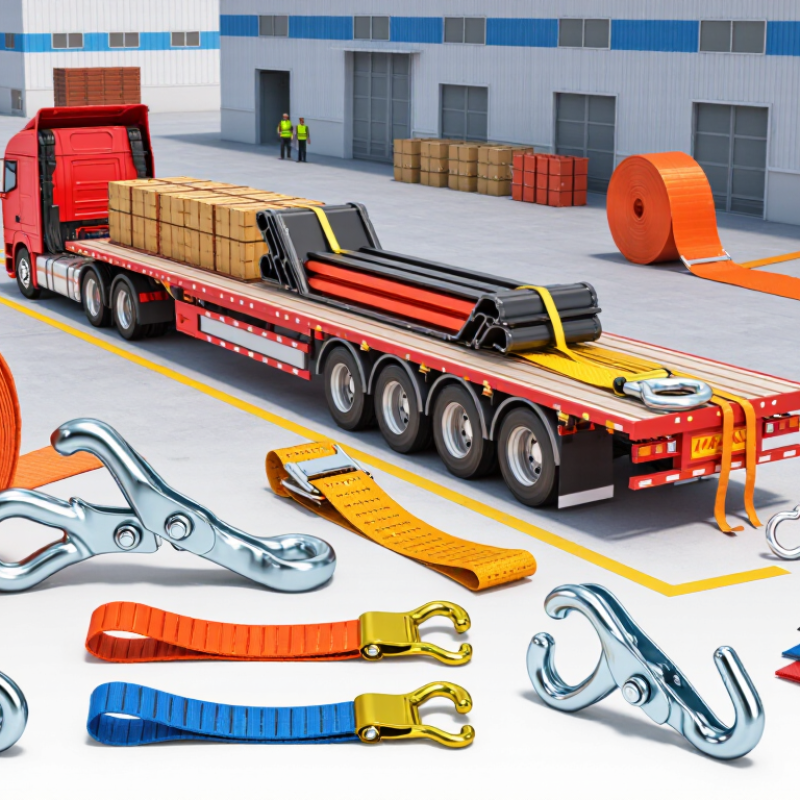
Truck ratchet straps are webbing assemblies used to hold cargo in place during transport. A typical strap has a ratchet handle, a length of woven polyester webbing, and end fittings that connect to suitable anchor points. The handle winds the webbing tighter, helping reduce movement from braking, turns, and road vibration. The strap does not make an unstable load safe by itself. Cargo should sit evenly, and the anchor points must be strong enough for the job.
A practical check starts with the strap’s label. Read its working load limit and follow the equipment maker’s instructions; never judge strength by appearance alone. Place webbing flat across the cargo, away from sharp edges that could cut or abrade it. Tighten until the load is secure, not until the handle or webbing is strained. It can be tempting to pull harder. That is not always better.
Tips: Check for fraying, torn stitching, damaged hooks, or a ratchet that sticks before use. After a short drive, stop in a safe place and check tension again. A strap can loosen as cargo settles, especially when the load has soft packaging. I sometimes find this step easy to skip, but it is worth making routine. If a strap is damaged or its label is unreadable, set it aside rather than guessing.
How China’s Ratchet Strap Manufacturing Industry Is Organized
China’s ratchet strap industry is organized around specialized production clusters rather than a single, unified supply chain. Textile mills supply polyester webbing, while separate workshops make steel hooks, ratchets, and buckles. Converters then stitch, assemble, inspect, and pack finished tie-downs. The division allows factories to adjust webbing width, color, and hardware for different buyers. It can also make quality uneven between suppliers.
Demand is connected to commercial transport. The China Association of Automobile Manufacturers reported 4.03 million commercial vehicles sold in China in 2023, a useful indicator of the country’s large vehicle and logistics base. But vehicle sales do not directly measure ratchet-strap demand. That distinction matters. Buyers typically assess working load limits, stitching consistency, hardware finish, and traceability, rather than relying on factory size alone. In a practical audit, inspect bar-tack seams and check whether labels match test records. Ask how a supplier controls incoming webbing and rejects damaged hooks. Small details count.
The structure has trade-offs. Outsourced components can reduce cost, yet create delays when hardware specifications change. Some smaller factories also depend heavily on manual inspection. That is not automatically a problem, but it deserves verification. A clear process beats a glossy catalogue.
Common Ratchet Strap Webbing Widths
Ratchet straps are assembled from webbing, ratchet hardware, end fittings, and stitching. The widths shown are common nominal options, not a universal product range or a measure of load capacity. The finished strap’s rated capacity depends on the complete assembly and its specifications.
Key Manufacturers and Their Production Capabilities
China Top Truck Ratchet Straps Manufacturers: Production Capabilities
Chinese manufacturers of truck ratchet straps vary in scale, equipment, and quality-control practices. Many combine webbing production, metal-component sourcing, sewing, and final assembly. Larger facilities may operate automated cutting and stitching lines, while smaller workshops rely more heavily on manual inspection. This affects output consistency, lead times, and the range of custom options. Ask suppliers how they test strap strength, stitching, buckle operation, and finished-product dimensions. Clear records matter.
Production capability is more than monthly volume. A capable factory should explain its material specifications, sample process, inspection points, and capacity during peak seasons. Buyers can request recent production samples and compare webbing width, edge finish, label details, and ratchet movement. Some suppliers outsource hardware or weaving, so confirm which steps happen in-house. Details can shift between orders; that deserves a closer look.
Tips: Share the required strap length, width, working-load information, packaging, and order quantity before requesting a quote. Ask for a sample from the intended production process, not just a showroom piece. Check that test reports match the exact product configuration. A polished sample helps, but it does not guarantee every batch will be identical. Verify the details.
Materials, Safety Standards, and Quality Control
China Top Truck Ratchet Straps Manufacturers: Materials, Safety Standards, and Quality Control
A dependable truck ratchet strap starts with webbing that suits the load and working conditions. Polyester is commonly used because it stretches relatively little and resists moisture better than some alternatives. Check the strap’s width, stitching, and edge finish; loose threads or uneven seams deserve attention. Feel the webbing. It should not have brittle patches, cuts, or noticeable discoloration.
The ratchet and hooks need equally careful inspection. Look for smooth movement, secure pins, and metal surfaces without cracks or sharp burrs. Clear labels should show working load limit, strap length, and manufacturer traceability. Standards such as EN 12195-2 may be relevant to the intended market, but a printed reference alone does not prove product quality. Ask suppliers how they verify compliance and provide test records.
Good factory control includes checking incoming materials, monitoring stitching, and testing finished straps against defined procedures. Ask how often samples are tested and how failed units are handled. A clean inspection sheet helps. It is not the whole story. If possible, compare documents with a physical sample, especially around the seams and ratchet assembly. Even experienced buyers can miss a small defect when reviewing photos.
How to Evaluate and Select a Chinese Manufacturer
Choosing a Chinese truck ratchet strap manufacturer takes more than comparing quoted prices. Start with the intended use, strap width, length, hardware, and required working load limit. Ask how the supplier distinguishes working load limit from breaking strength. Clear labels and consistent test records matter. Details matter. Request a sample and inspect the webbing for uneven edges, loose threads, and color variation. Operate the ratchet several times. It should move smoothly and lock securely, without sharp burrs or excessive play.
Evaluate the factory’s process, not just its product photos. Ask whether webbing, stitching, and hardware are checked during production, and request recent inspection records. A reliable supplier should explain how failed items are handled and how batches can be traced. Ask for drawings, material specifications, and packaging details before confirming an order. Then compare the sample with the approved specifications. Ask for evidence. Video calls can help clarify production capacity, but they do not replace documented checks. One thing I have learned is that a polished sample may not represent every production batch. That is worth remembering. Discuss lead times, minimum order quantities, and change control in writing. If answers remain vague, pause and ask more specific questions before paying a deposit.