Empowering Engineering Excellence: Innovate, Elevate, Deliver.
Finding the right source for Hydraulic Cylinders For Sale starts with the machine, not the search results. Check the required bore, rod diameter, stroke, mounting style, operating pressure, and port size. A cylinder that looks nearly identical may still have the wrong stroke or mounting points. Measure the old unit, and photograph its label and connections before requesting a quote.
Hydraulic engineer and technical author Andrew Parr’s published guidance can be summarized this way: “Choose for the working conditions, not the catalog label.” This is a paraphrase, not a direct quotation. That distinction matters when comparing suppliers. Original equipment manufacturers can help match a replacement to a specific machine. Authorized distributors may offer technical support, while specialist online sellers can provide broad catalogs and quick comparisons. Ask each seller for a dimensioned drawing, material details, seal options, pressure rating, lead time, and warranty terms. Fit matters. So does support.
Price can be tempting, especially when a machine is idle and every hour feels expensive. Still, a low-cost cylinder without clear specifications may create more delays than savings. Read the product details carefully, confirm return conditions, and get compatibility answers in writing. If the application is unusual, share its load, duty cycle, and environment with a qualified supplier before ordering. This guide compares practical places to buy, explains what to verify, and helps you choose with fewer costly assumptions. It will not make every decision effortless. That is worth admitting.
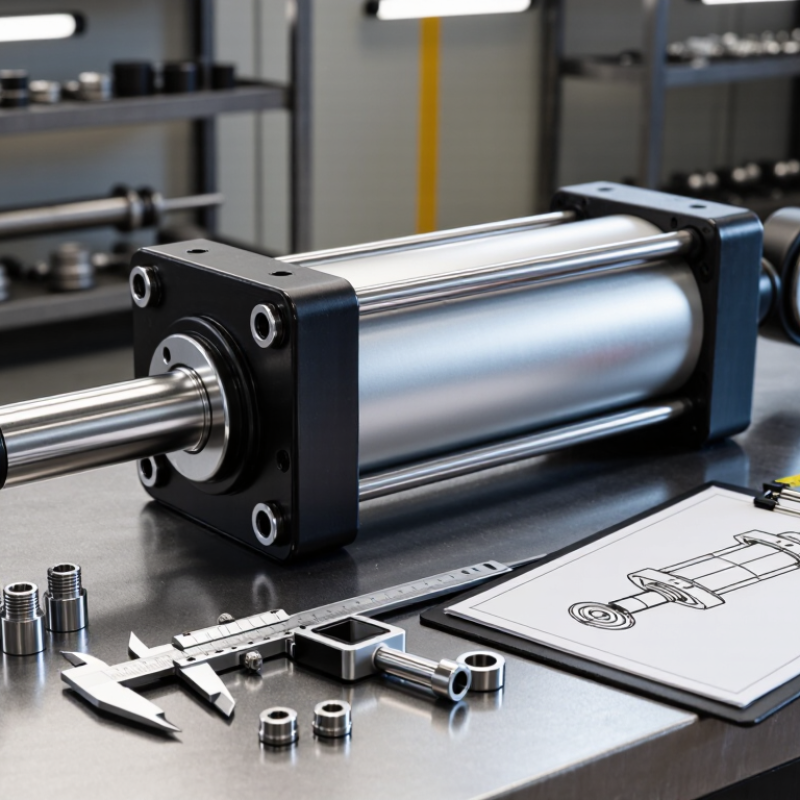
Where to Buy Hydraulic Cylinders for Sale?
Before searching for hydraulic cylinders for sale, define the machine’s real requirements. Record the required lifting force, stroke length, operating pressure, and cycle speed. Measure the retracted length carefully. Check the mounting style, pin diameter, port size, and available installation space. A cylinder that fits the load may still fail if its body hits nearby components.
In field maintenance, I have seen replacements chosen from pressure ratings alone. That shortcut caused slow movement and uneven loading. Consider fluid type, temperature, side loads, corrosion exposure, and expected operating frequency. Ask suppliers for load calculations, material details, seal compatibility, and dimensional drawings. Reliable sellers should answer clearly and provide inspection or testing information. A rough sketch helps, but it can mislead. Verify every measurement with a physical part or calibrated tool.
Tips: Write down the machine’s peak load, not only its normal load. Leave practical clearance around hose connections. Check whether the cylinder pushes, pulls, or works in both directions. Compare the quoted stroke with the actual movement needed. If the application includes side force, consult a qualified hydraulic technician before ordering. I once overlooked a small mounting offset; the cylinder worked, but alignment was poor. That detail deserved more attention.
| Category | What to Determine or Compare | Why It Matters | What to Verify Before Ordering |
|---|---|---|---|
| Define the Cylinder Requirements | |||
| Cylinder type | Choose single-acting or double-acting operation, and establish whether a tie-rod, welded, telescopic, or other construction suits the application. | Operating method, space constraints, serviceability, and load direction affect the appropriate cylinder design. | Confirm how the cylinder extends and retracts, how it is mounted, and whether the application requires a compact or multi-stage design. |
| Required force and pressure | Specify the required push or pull force and the system’s normal and maximum working pressure. | For an ideal extension stroke, force is approximately pressure multiplied by piston area. Retraction force is lower because the rod reduces the effective piston area. | Have the supplier confirm that the cylinder’s rated pressure and force suit the system. Do not treat a test or burst pressure as a working-pressure rating. |
| Bore and rod diameter | Record the bore (piston diameter) and rod diameter, or provide the required force and system pressure for sizing assistance. | Bore affects available force; rod size affects pull force and resistance to buckling under compression loads. | Check load direction, unsupported rod length, stroke, and mounting conditions when assessing rod strength. |
| Stroke and overall length | Specify the required stroke and available space at both the retracted and extended positions. | The cylinder must reach the required positions without interfering with the machine or exceeding its available travel. | Confirm how the supplier measures stroke and overall length, including pin-to-pin or mounting-face dimensions where applicable. |
| Mounting and alignment | Identify the mounting style and dimensions, such as clevis, trunnion, flange, or pivot mounts, as applicable. | Correct mounting supports the load path and helps avoid harmful side loading. Hydraulic cylinders are generally intended to carry axial loads. | Provide mounting drawings, pin diameters, center-to-center dimensions, and details of the cylinder’s permitted movement. |
| Speed, flow, and duty cycle | Estimate desired extension and retraction speed, available pump flow, operating frequency, and expected hours of use. | Cylinder speed depends on flow and effective piston area. Frequent or continuous operation can affect heat generation and component life. | Ask the supplier to check flow requirements, cycle rate, and suitability for the intended duty cycle. |
| Fluid, seals, and temperature | Identify the hydraulic fluid, its operating temperature range, and the expected ambient temperature. | Seal materials and clearances must be compatible with the fluid and temperature conditions. | Confirm fluid and seal compatibility with the cylinder supplier, especially for unusual fluids or temperature extremes. |
| Ports and connections | Record port location, thread or connection type, size, and orientation, along with the required hose or tube connections. | Incorrect port specifications can prevent installation or create connection and clearance issues. | Provide the applicable thread standard and a drawing or photograph of the existing connection; do not rely on visual similarity alone. |
| Environment and protection | Describe exposure to dust, moisture, corrosive substances, impact, or outdoor conditions. | Environmental exposure can influence rod protection, coatings, wipers, and material choices. | Ask which protective options are available and appropriate for the actual operating environment. |
| Drawings and replacement fit | For a replacement, collect the old cylinder’s identification details, measurements, connection information, and clear photographs. | Similar-looking cylinders may differ in stroke, mounting dimensions, ports, or pressure rating. | Compare a dimensioned drawing and written specifications against the existing installation before purchase. |
| Choose Where to Buy | |||
| Hydraulic equipment distributor | Consider a distributor when you need help matching a cylinder to system pressure, flow, mounting, and connections. | Technical support and access to related hydraulic components can be useful for application-specific purchases. | Ask about technical assistance, available drawings, stock status, lead time, warranty terms, and return conditions. |
| Cylinder manufacturer or fabricator | Consider a direct source when standard dimensions are unavailable or the application requires a custom configuration. | A custom supplier may be able to review drawings and specify a cylinder for the stated operating conditions. | Request a written specification, rated working pressure, materials and seal details, dimensional drawing, and delivery estimate. |
| Industrial supply retailer or online seller | Consider a retailer for standard replacement cylinders when the required specifications are already known. | Online listings can make it convenient to compare dimensions and availability, but product details may vary in completeness. | Verify the full dimensional drawing, pressure rating, port standard, return policy, and whether the listed item includes the required fittings. |
| Local hydraulic repair shop | Consider a repair shop when you need an existing cylinder inspected, repaired, or matched to a replacement. | Inspection can help identify wear, seal failure, or damage that may affect the choice between repair and replacement. | Ask for a condition assessment, repair scope, parts availability, pressure-test information, and an estimate before authorizing work. |
| Final pre-purchase check | Compare the written specifications with the machine requirements and installation measurements. | A suitable purchase depends on compatibility and operating limits, not price or appearance alone. | Confirm model or part identification, dimensions, pressure rating, ports, mounting, delivery, warranty, and return terms in writing. |