Why Choose a Custom O Ring Kit Manufacturer?
Choosing a Custom O-Ring Kit Manufacturer is not merely a purchasing decision. It is a reliability decision.
MarketsandMarkets’ Seals Market report identifies aerospace, automotive, energy, and industrial equipment as major demand sectors. These applications require controlled sealing performance under pressure, heat, vibration, and chemical exposure. Grand View Research also reports continued growth in the global rubber seals market. That growth reflects a practical reality: standard kits cannot cover every groove, compound, or operating condition.
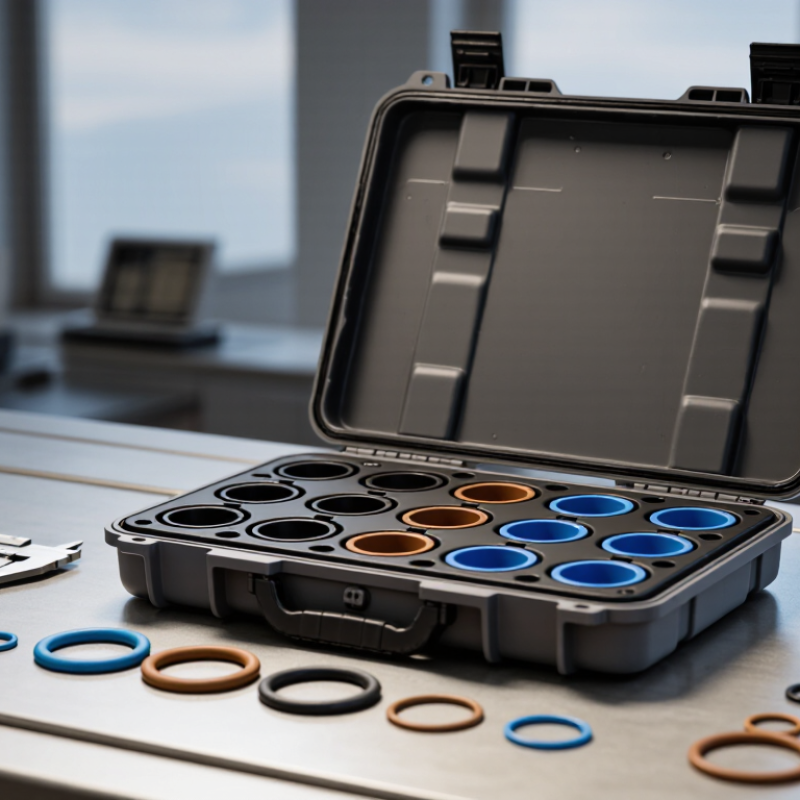
Dr. Robert Flitney, author of Seals and Sealing Handbook, states, “The seal must be selected for the application.” That principle sounds simple. It is often ignored. A capable Custom O-Ring Kit Manufacturer begins with groove measurements, pressure ranges, temperature cycles, fluid compatibility, and installation conditions. The result may include several sizes, color-coded compartments, inspection records, and materials matched to standards such as ISO 3601 or ASTM D2000.
There is value in the details.
For example, an EPDM ring may suit hot water, while it may fail quickly in petroleum-based oil. A carefully labeled kit can prevent that mistake during maintenance, especially when technicians work under time pressure. Experienced manufacturers also support prototype testing, compound traceability, and repeatable batch control.
No kit is perfect. Material data can vary. Field conditions can surprise engineers. Therefore, supplier communication remains essential. A trustworthy manufacturer does not promise universal performance. It explains limitations, validates recommendations, and improves the kit through testing and feedback. That approach turns a box of O-rings into a practical sealing system.
O-Ring Kits Explained: Sizes, Materials, Standards, and Applications
Why Choose a Custom O Ring Kit Manufacturer?
An O-ring kit is more than a box of assorted seals. It should match size, material, hardness, lubrication, and service conditions. Common dimensions use inside diameter and cross-section, while ISO 3601 and SAE AS568 define recognized sizing systems. Metric and imperial sizes can look nearly identical. They are not interchangeable.
Material selection depends on temperature, pressure, fluid, and exposure time. NBR suits many hydraulic oils and pneumatic systems. FKM handles higher temperatures and aggressive fluids. EPDM performs well with water, steam, and selected chemicals. Silicone remains flexible in cold conditions, but it may resist abrasion poorly. ASTM D2000 helps classify elastomer performance, although compound-specific testing still matters. A shortcut here is tempting.
The U.S. Department of Energy reports that compressed-air leaks may waste 20–30% of compressor output. A damaged or poorly fitted seal can contribute to that loss. Custom kits reduce searching time and help technicians carry the correct backup parts. Applications include hydraulic cylinders, pumps, valves, medical equipment, and food-processing machinery. Each environment needs documented compatibility and traceable inspection records. A reliable manufacturer should provide dimensional checks, material certificates, hardness data, and packaging that prevents deformation. Small details matter. Yet no kit is perfect without field feedback; temperature spikes, installation damage, or an overlooked cleaning chemical can expose an incorrect assumption.
Why Choose a Custom O-Ring Kit Manufacturer?
O-Ring Kits Explained: Sizes, Materials, Standards, and Applications
Material selection is a key benefit of a custom O-ring kit. The chart compares typical maximum continuous service temperatures for widely used elastomer materials. Actual limits depend on compound formulation, pressure, fluid compatibility, compression, and operating conditions.
A custom kit can combine the correct sizes and materials for relevant standards such as AS568 or ISO 3601, supporting applications in hydraulics, pneumatics, automotive systems, chemical processing, food equipment, and general maintenance.
Temperature values are generalized engineering reference ranges and should be verified against the selected compound manufacturer's technical data.
How Custom Kits Follow AS568 and ISO 3601 Dimensional Requirements
Why Choose a Custom O Ring Kit Manufacturer?
A custom O ring kit manufacturer can build kits around real assembly conditions, not generic assumptions. Each groove, shaft, and housing needs careful dimensional review. AS568 provides standardized inch sizes, while ISO 3601 defines metric and imperial requirements for seals and related applications. A reliable manufacturer compares the selected O ring diameter, cross-section, and tolerance against these standards. This reduces fitting problems during installation. It also helps engineers maintain consistent sealing performance across replacement kits.
Custom kits can include several approved sizes, materials, and hardness options for one maintenance task. Each pocket may be labeled with the size, compound, and inspection information. That detail matters when technicians work beside a machine, often with limited light and time. Experienced suppliers also review compression, stretch, pressure, temperature, and fluid exposure. Still, dimensions alone do not guarantee success. A seal may meet AS568 or ISO 3601 requirements but fail in an unsuitable groove. That point is easy to overlook.
Tips: Request dimensional inspection records before approving a kit. Confirm whether measurements follow AS568 or ISO 3601, because the references are not interchangeable in every application. Check material compatibility with actual fluids, not only catalog descriptions. Keep one sample assembly for fit testing. A small mistake in groove measurement can affect an entire production run. Reviewing the design twice is slower, but replacing failed seals is slower still.
Why Material Selection Matters: NBR, EPDM, and FKM Temperature Ranges
Choosing a custom O ring kit manufacturer begins with understanding temperature, not just size. In field maintenance, a seal may face cold storage, hot fluid, and sudden thermal changes within one shift. Material selection determines whether it remains flexible or develops cracks.
NBR is a practical choice for mineral oils and many hydraulic applications. Typical service temperatures range from about -30°C to 100°C. EPDM handles hot water, steam, and weathering better, often from -50°C to 150°C. However, it is generally unsuitable for petroleum-based oils. FKM offers strong resistance to fuels, chemicals, and higher heat, commonly operating from -20°C to 200°C. Some compounds reach higher temperatures, but relying on a catalog maximum can be risky.
Real conditions are less tidy. Pressure, compression, fluid exposure, and installation quality can reduce these temperature limits. A reliable custom manufacturer should confirm the compound, hardness, dimensions, and batch traceability before producing the kit. It should also explain test results in clear terms. That matters during an urgent repair.
Small details matter. A kit stored beside a hot machine may age faster. An incorrectly lubricated ring may swell. These mistakes happen.
No single elastomer fits every application. A thoughtful manufacturer may recommend several material options, then question the original specification when service evidence does not match it. That extra challenge can prevent repeated leakage and unnecessary replacement.
How Custom Manufacturers Improve Sealing Reliability and Reduce Downtime
A custom O ring kit manufacturer can improve sealing reliability by designing around the equipment, not a generic size chart. Standard kits often leave gaps. When dimensions drift, leaks follow. That is costly. Custom suppliers review groove measurements, operating pressure, temperature, and installation space before selecting each seal. They can match materials to hydraulic fluid, steam, dust, or repeated movement. In field maintenance, this detail often prevents small leaks from becoming long shutdowns.
A well-designed kit also reduces repair delays. Each O ring can have a clear size, material, and location label. Technicians spend less time searching through mixed parts. Custom manufacturers may provide inspection records, material data, and controlled batch traceability. These details support consistent replacement work across multiple machines. Material choice is not cosmetic. Heat, pressure, chemicals, and friction can change seal performance quickly. The process is not flawless. Measurements can be wrong. A rushed drawing or unreported temperature spike can still defeat a good seal.
Tips: Measure the groove, shaft, and housing carefully. Record real operating temperatures, not assumed values. Check fluid compatibility before ordering. Keep one tested spare kit near the maintenance area. Photograph the installed seal before removal. Small records help, though teams sometimes overlook them during urgent repairs. Review failed O rings for cuts, swelling, flattening, or hardening before changing the specification.
When Custom Kits Outperform Standard Assortments in 1,000+ Seal Configurations
Why Choose a Custom O Ring Kit Manufacturer?
Standard assortments are convenient, but they often hide a costly mismatch. A kit may contain the right diameter and the wrong elastomer. That small error can cause swelling, leakage, or premature compression set. With more than 1,000 seal configurations, custom kits match groove dimensions, pressure, temperature, media, and hardness. A capable manufacturer also checks tolerances against ISO 3601 requirements. That matters when a seal must fit a narrow gland without twisting.
Field experience reveals another issue: inventory is rarely as simple as it appears. Maintenance teams may store hundreds of rings but still lack one critical size. The U.S. Department of Energy reports that compressed-air leaks can waste 20–30% of compressor output. Poorly selected or aged seals can contribute to that loss. A custom kit can group verified sizes by equipment, service interval, and material. NBR may suit mineral oil, while EPDM usually performs better with water-based fluids. FKM can handle higher temperatures, but it is not a universal solution.
Traceability is essential. Each compartment should show compound, hardness, size, batch, and inspection status. Color labels help, though labels alone are not enough. Mistakes still happen during hurried repairs. A reliable manufacturer therefore supplies drawings, material certificates, and replacement logic. The process may cost more initially. Yet fewer emergency purchases, less downtime, and cleaner maintenance records can make custom kits the more practical choice.