Empowering Engineering Excellence: Innovate, Elevate, Deliver.
Why National Development and Reform Commission Matters?
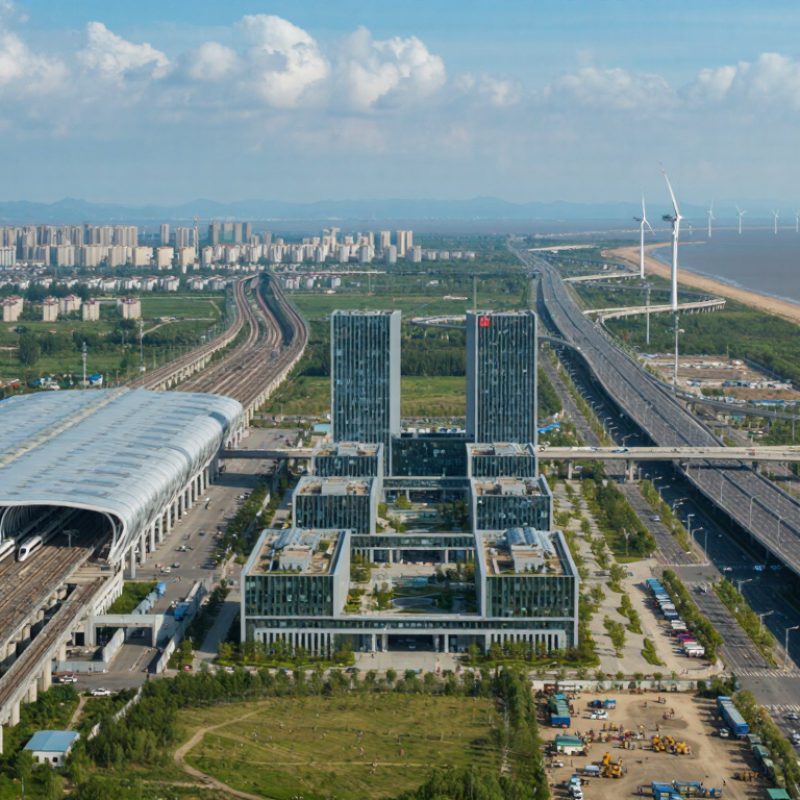
The National Development and Reform Commission is more than a planning office. It helps shape China’s long-term economic direction. Its work connects national strategy with practical decisions about infrastructure, energy, regional development, and investment. A railway corridor, a coastal wind project, or a technology park may reflect this coordination.
Zhang Yansheng, former chief economist of the Institute of Macroeconomic Research under the National Development and Reform Commission, once observed, “China’s reform has entered a deep-water zone.” This statement explains the Commission’s importance. Economic reform becomes harder when growth, employment, environmental pressure, and regional inequality collide. The Commission must weigh these competing demands.
Its influence also comes from its ability to translate broad goals into measurable plans. Five-year strategies, investment guidelines, and price-related policies can affect businesses, local governments, and households. These decisions may appear distant. Their effects can reach a factory floor or a family budget.
Still, the National Development and Reform Commission is not a perfect machine. Policy coordination can be slow. Some targets may encourage local governments to focus on numbers rather than results. That weakness deserves honest examination.
Understanding the Commission requires more than reading official plans. It requires examining outcomes, implementation, and public feedback. Its value lies in balancing national ambition with economic reality. That balance is difficult. It remains essential.
The National Development and Reform Commission (NDRC) is China’s central agency for economic planning and structural reform. It works under the State Council and coordinates national strategies, major investment projects, regional development, and selected price policies. Its role is broader than annual budgeting. It connects long-term plans with practical decisions, such as infrastructure approvals and energy transition targets.
The commission matters because China’s economy is large, complex, and regionally uneven. The World Bank’s China Economic Update reported 5.2% economic growth in 2023, while urbanization reached about 66% of the population. These figures create pressure for better transport, public services, and productivity. The NDRC helps align those priorities across provinces. It also evaluates major projects, which can reduce duplication and improve the use of public funds.
Its influence is visible in energy policy. The International Energy Agency reported that China contributed nearly 60% of global renewable capacity additions in 2023. The NDRC helps coordinate investment, grid planning, and market reforms behind such expansion. Yet coordination is not always smooth. Approval systems can be slow, and policy signals may change. Local implementation can also differ from national intentions. That gap deserves closer review.
The National Development and Reform Commission was established in 2003 during a major adjustment of China’s central economic administration. It replaced the former State Planning Commission and absorbed selected responsibilities from another economic management body. This change reflected a practical concern: economic growth needed broader coordination than physical production targets alone.
The Commission operates as a ministry-level department under the State Council. Its organization combines policy research, economic forecasting, investment review, price administration, regional planning, and reform coordination. Different departments examine areas such as infrastructure, energy, employment, social development, and international cooperation. Their work often connects with provincial governments and other central departments. A transport project, for example, may require investment assessment, regional analysis, environmental review, and long-term demand estimates before approval.
This structure gives the Commission a wide view of national development. It can compare local proposals with broader economic priorities. Yet wide responsibility can also create overlap and slower decisions. That is worth questioning. In real administrative work, coordination is not always as smooth as an organizational chart suggests. Policy research may identify a problem quickly, while implementation faces budget limits, regional differences, or changing market conditions. The Commission’s history therefore shows an evolving institution, not a fixed machine. Its organization continues to reflect the difficult balance between central direction, local needs, and economic uncertainty.
Why National Development and Reform Commission Matters?
The National Development and Reform Commission helps shape China’s economic direction. Its main responsibility is strategic coordination. It studies growth, employment, investment, regional development, and long-term risks. It also prepares major national development plans and monitors their implementation.
Its policy tools are practical and wide-ranging. The Commission can guide fixed-asset investment through project reviews and approval rules. It can influence prices for selected public services and essential goods. It also coordinates energy planning, regional strategies, and major infrastructure decisions. Economic monitoring provides data for timely policy adjustments. These tools do not operate alone. They often depend on cooperation among central departments, local governments, and public institutions. The system is powerful, but not perfectly predictable. Policy signals may change when economic conditions shift.
Tips: Read official plans with implementation notices. Compare targets, funding signals, and approval requirements. For businesses and researchers, local follow-up documents matter greatly. A national goal may produce different timelines across regions. Avoid treating every announcement as an immediate rule. That mistake can distort practical decisions.
Selected 2024 policy tools coordinated or implemented with the NDRC, showing how economic planning is translated into investment, industrial upgrading, and demand-support measures.
The figures are announced or allocated amounts in 2024 and are shown in RMB trillion. They illustrate policy scale and are not additive because some measures overlap in purpose or funding source.
Sources: China Government Work Report 2024; National Development and Reform Commission announcements on the 2024 central budget investment plan and large-scale equipment renewal and consumer-goods trade-ins.
Why National Development and Reform Commission Matters?
China’s National Development and Reform Commission influences economic and social development through planning, coordination, and policy evaluation. Its work connects national priorities with practical projects, such as transport networks, energy systems, public services, and regional development. A five-year plan may sound distant, yet it can affect local budgets, industrial investment, employment, and household services. The commission also studies prices, investment conditions, and structural reforms. This gives policymakers a wider view before major decisions are made.
The process is not always smooth. A target written on paper may face different realities in coastal cities, inland counties, and rural communities. Local officials must adapt national goals to land, labor, resources, and public needs. Data can guide these choices, but data is never perfect. Public feedback and independent evaluation remain important. Without them, impressive investment figures may hide weak services or uneven benefits. This is where the commission’s coordinating role matters most: it can identify gaps, adjust priorities, and encourage more balanced growth.
Tips: When analyzing its influence, track both policy design and local results. Look beyond headline investment numbers. Check employment quality, household costs, environmental effects, and access to education or healthcare. Compare targets with measurable outcomes. Ask who benefits, who pays, and what changed after implementation. Some conclusions will remain uncertain. That uncertainty deserves honest discussion.
Selected official indicators illustrating the National Development and Reform Commission’s coordination role in national planning, investment, structural reform, regional development, innovation, urbanization and energy transition.
| Period | Policy Dimension | National Development and Reform Commission Relevance | Official Indicator or Planning Target | Reported Value | How It Shapes Development |
|---|---|---|---|---|---|
| 2003–Present | Institutional Coordination National economic planning | The commission was established in 2003 as the central government’s macroeconomic management and development-planning body. Its responsibilities include national strategies, medium- and long-term plans, investment coordination, price regulation and structural reform. | Establishment of a comprehensive national planning and reform institution | Established in 2003 | It links economic objectives with investment, regional policy, resource allocation and social priorities instead of treating these areas as separate policy tasks. |
| 2013–2024 | Urbanization Public services and regional development | The commission has coordinated national urbanization strategies and policies intended to improve urban public services, guide orderly population movement and promote balanced regional development. | Urban resident share of the population | 53.73% in 2013 67.00% in 2024 | Rising urbanization increases demand for housing, transport, education, healthcare, employment services and municipal infrastructure, making coordinated planning essential. |
| 2016–2020 | Energy Efficiency Green development | Through national planning and cross-ministerial coordination, the commission helped implement energy-saving, industrial restructuring and pollution-control priorities under the 13th Five-Year Plan. | Reduction in energy consumption per unit of GDP during the 13th Five-Year Plan | 13.5% reduction | Lower energy intensity supports economic growth while reducing resource pressure and improving the environmental performance of industrial and urban development. |
| 2020 | Economic Resilience Macroeconomic stabilization | National planning and investment coordination supported economic stabilization during a period of major external and domestic disruption. | Annual real GDP growth | 2.2% | Positive growth during a global shock demonstrated the importance of coordinated fiscal, investment, employment and industrial policies. |
| 2021–2025 | Medium-Term Planning 14th Five-Year Plan | The commission plays a central role in preparing, monitoring and coordinating implementation of the 14th Five-Year Plan, which integrates economic, social, environmental and security-related objectives. | Research and development expenditure growth target | Average annual growth of more than 7% | A quantified innovation target directs public policy toward productivity growth, technological capability and higher-quality economic development. |
| 2021–2025 | Innovation Knowledge-based growth | National development planning emphasizes stronger domestic innovation capacity, improved research systems and the integration of innovation with industrial and regional development. | Research and development expenditure as a share of GDP | 2.40% in 2020 2.68% in 2024 | Higher research intensity can strengthen productivity, support industrial upgrading and reduce dependence on low-value-added growth. |
| 2021–2025 | Low-Carbon Transition Climate and energy policy | The commission coordinates implementation of national carbon-peaking and carbon-neutrality strategies, including energy restructuring, efficiency improvement and the development of low-carbon infrastructure. | Reduction target for energy consumption per unit of GDP during the 14th Five-Year Plan | 13.5% target reduction | The target encourages energy efficiency and changes in the economic structure while keeping long-term environmental constraints within national development planning. |
| 2021–2025 | People-Centered Development Quality-of-life outcomes | National plans coordinated by the commission include employment, income, education, healthcare, social security and public-service objectives alongside economic targets. | Average life expectancy, a major social-development indicator | 77.93 years in 2020 78.17 years in 2023 | Including social indicators in national planning ensures that development is assessed not only by output growth but also by improvements in living standards. |
| 2021–2024 | Growth Quality Structural transformation | The commission promotes a shift from extensive growth toward higher-quality development through domestic demand, innovation, coordinated regional development and improved economic resilience. | Annual real GDP growth | 8.1% in 2021 3.0% in 2022 5.2% in 2023 5.0% in 2024 | These results show both the volatility of the external environment and the continuing importance of macroeconomic coordination in sustaining stable growth. |
Sources: National Development and Reform Commission policy documents and Five-Year Plans; National Bureau of Statistics of China; National Health Commission of China. Figures marked as targets describe official planning objectives, while reported values describe national outcomes and should not be interpreted as being produced by the commission alone.
The National Development and Reform Commission matters beyond China’s borders. It coordinates long-term planning, major investment, energy policy, and regional development. These decisions influence factories, ports, power grids, and household prices. The World Bank’s Global Economic Prospects, January 2025, projected China’s economy would grow 4.5% in 2025. Even slower growth affects global commodity demand, shipping volumes, and emerging-market suppliers.
Energy makes its role even more visible. The International Energy Agency’s Renewables 2024 report expects China to provide nearly 60% of global renewable capacity additions through 2030. A planning decision in Beijing can therefore change demand for minerals, equipment, electricity, and transport services worldwide. That influence brings responsibility. Clearer data, stable rules, and careful consultation could reduce uncertainty for international investors and local businesses.
But the commission is not a magic solution. Planning can improve coordination, yet targets may become rigid when technology or consumer demand changes. Regional projects can also look impressive before their long-term returns are tested. My view is imperfect: speed matters, but evidence matters more. The commission’s global value will depend on whether plans become transparent, measurable, and flexible enough to correct mistakes.